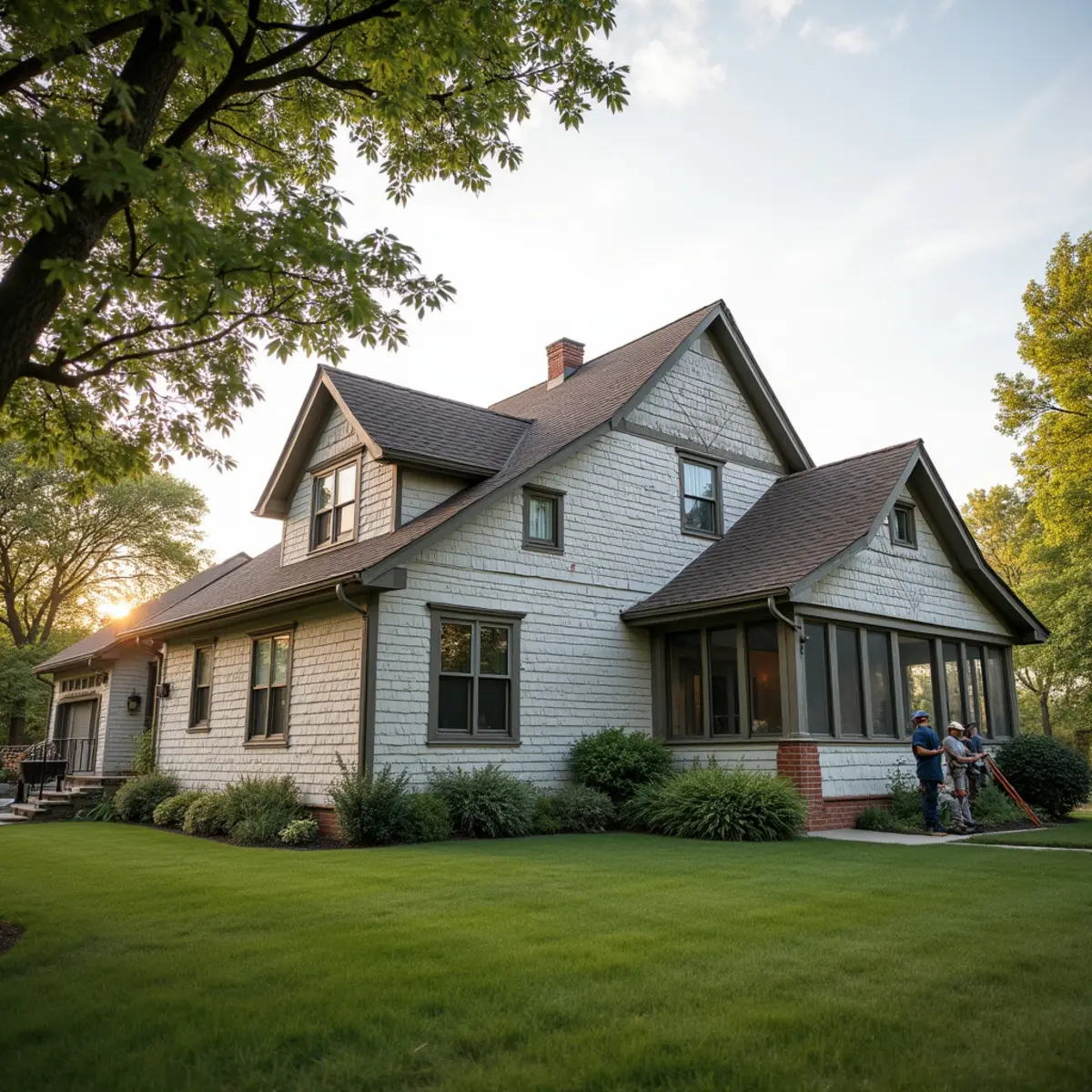
In the Upper Midwest, siding lifespan depends heavily on material and installation. Vinyl commonly lasts around 20 to 40 years, fiber cement often 30 to 50 years or more, engineered wood roughly 20 to 40 years, and steel 40 years or longer. Wisconsin’s freeze-thaw cycles, sun exposure, and installation quality all shift those numbers up or down.
Vinyl siding
Quality vinyl typically lasts about 20 to 40 years in the Upper Midwest. It never rots and needs little upkeep beyond occasional washing, which makes it a low-effort choice for a long stretch of years.
Its main aging signs are color fading over decades of sun exposure and, on thin or older vinyl, cracking from impact in cold weather. Thicker and insulated vinyl tends toward the longer end of the range because it is more rigid and durable.
Vinyl also tends to age gracefully rather than fail suddenly. Many homeowners replace it because the color has faded or the style looks dated well before the material has structurally failed, which makes its practical lifespan partly a matter of appearance and taste.
The gap between the low and high end of vinyl’s range mostly comes down to product grade and installation. A thin builder-grade panel installed carelessly lands near the bottom, while a heavier premium or insulated product installed with proper flashing reaches toward the top of the range.
Fiber cement
Fiber cement is one of the longest-lasting mainstream options, often 30 to 50 years or more. It resists rot, pests, and fire, and holds finishes well, so it keeps its appearance over a long service life.
Its longevity depends on primed cut edges, correct gapping, and periodic repainting or caulk maintenance. Treated well, fiber cement can outlast the mortgage on a home, which is part of its appeal for owners planning to stay put.
Because it does not rot or feed insects, fiber cement often reaches the far end of its range as long as moisture is kept from sitting against unsealed edges. The finish may need refreshing along the way, but the substrate itself is remarkably durable in the Upper Midwest climate.
Engineered wood
Engineered wood generally lasts about 20 to 40 years. It is treated to resist rot and pests and holds up well to impact, flexing rather than cracking in the cold.
Respecting clearances above grade and roofs and keeping the coating intact are what push it toward the upper end of that range. Where its coating is maintained and water is kept from sitting against it, engineered wood is a durable, long-lived product.
Because it is engineered from treated wood, it combines much of natural wood’s workability and appearance with far better resistance to rot and insects. That balance is why it has become a popular middle ground between economical vinyl and premium fiber cement in the Upper Midwest.
Steel and metal siding
Steel siding is extremely durable and can last 40 years or longer. It will not rot, crack in the cold, or burn, and it sheds snow well, which suits the Upper Midwest.
Its main vulnerabilities are denting from hard impact and, on lower-grade products, finish wear over many years. For homeowners who want maximum toughness and minimal replacement worry, steel is hard to wear out.
What about natural wood?
Traditional wood siding such as cedar can last a long time, but only with diligent upkeep. In the Upper Midwest it needs regular staining or painting, and it is vulnerable to rot, insects, and moisture if that maintenance slips, so its real-world lifespan varies enormously from one home to the next.
This is why many homeowners who love the wood look choose engineered wood or fiber cement instead. They deliver a similar appearance with far less vulnerability to the moisture and freeze-thaw stress that shorten the life of natural wood in our climate.
What extends or shortens siding life
Installation is the biggest variable of all. Proper flashing, fastening, gapping, and a good weather barrier can add years to any material, while shortcuts invite early failure regardless of the product’s rated lifespan.
Exposure matters too: south and west walls take more sun, and areas that trap snow or splash-back see more moisture. Routine washing, caulk inspection, and prompt repairs all help you reach the top of the expected range rather than the bottom.
It is common for one elevation of a home to wear faster than the others. A sun-blasted south wall or a north wall that stays damp and shaded may need attention years before the rest, so lifespan is best judged wall by wall, not as a single number for the whole house.
Wondering how much life your siding has left?
If your siding is aging or showing wear, an inspection tells you whether to maintain, repair, or start planning for replacement. Knowing where you stand helps you budget rather than get caught by a sudden failure.
Keep in mind that lifespan ranges are averages, not guarantees. A well-installed, well-maintained product on a sheltered home can outlast its range, while a neglected one on an exposed lot can fall short. The best way to know where your siding stands is to have it looked at rather than to guess from its age.
Overcash Siding has served greater Madison homeowners since 1978. Request a free estimate and we will assess your siding’s condition honestly and tell you what we would do in your position.