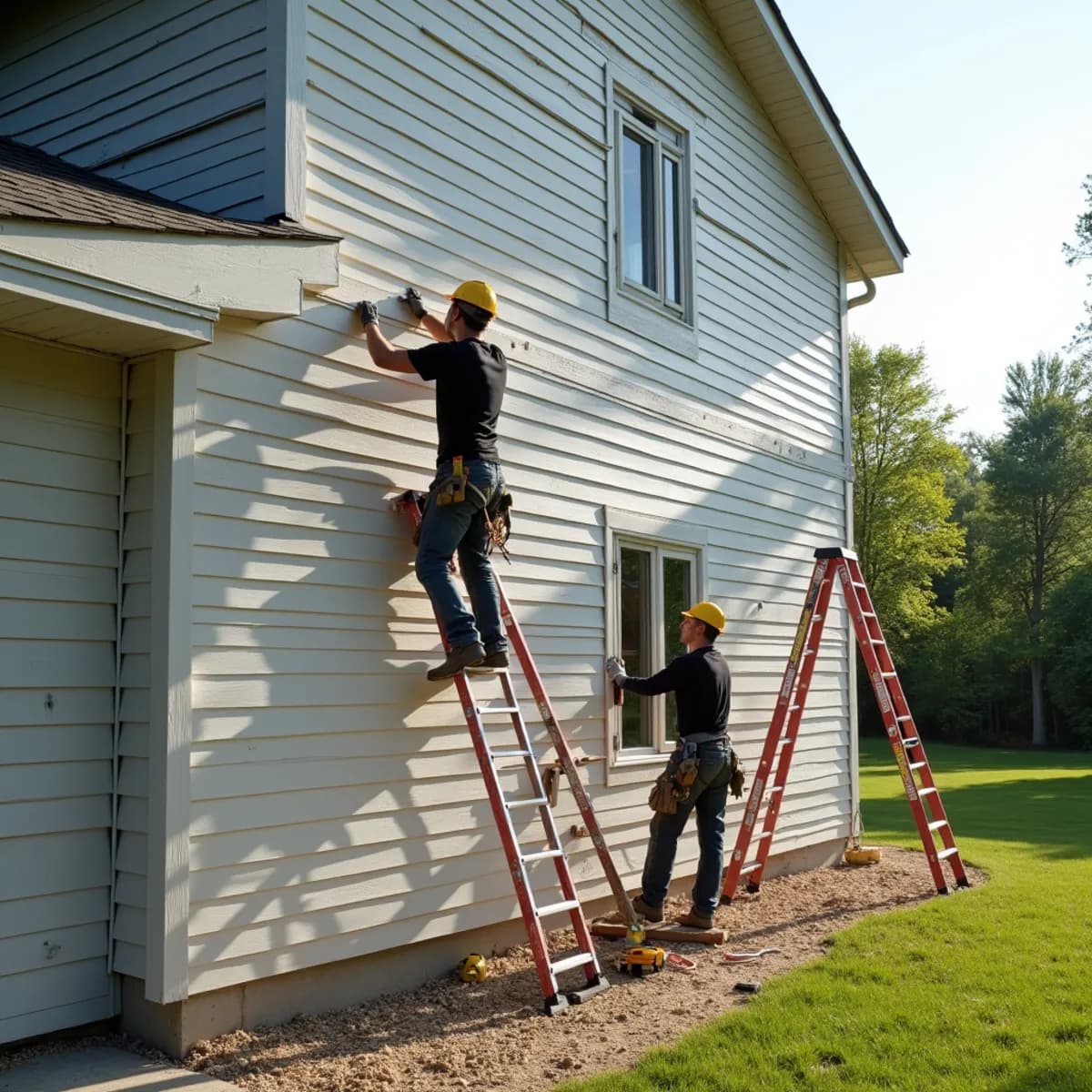
Overcash Siding installs new siding on single-family homes throughout the greater Madison area, from new construction to first-time siding on additions and re-clad projects. We handle the full assembly — weather-resistant barrier, flashing, trim, and your chosen material — so the finished wall sheds water and stands up to Wisconsin weather.
A siding installation is only as good as the layers you never see. On every De Forest and Madison-area home we side, the visible panels are the last step of a system that starts with a properly lapped weather-resistant barrier, correct flashing at every window and door, and trim details that direct water away from the wall assembly. Skipping those steps is how homes end up with hidden moisture damage a few winters later.
We have installed siding on Dane County homes since 1978, through decades of freeze-thaw cycles, wind-driven rain, and heavy snow load. That local track record shapes how we detail an installation for this climate rather than a generic warm-weather spec.
When Homeowners Choose a New Siding Installation
- New construction or a home addition that needs its first siding
- Replacing a different exterior material (stucco, T1-11, or old wood) with modern siding
- A re-clad where old siding is torn off down to the sheathing for a fresh, correctly detailed system
- Adding insulated siding or a house wrap upgrade during a larger exterior project
A Complete Wall System, Not Just Panels
We install siding as an integrated system. That means inspecting and repairing the sheathing, installing or upgrading the weather-resistant barrier, flashing windows, doors, and penetrations, and adding trim and corner details that lock the assembly against wind-driven rain. Getting the water-management layer right is what protects your framing and insulation for the long run.
Because our crews are local, we detail installations for the way water and ice actually behave on Madison-area homes — kickout flashing where a roof meets a wall, generous overlaps on the north and west exposures that take the brunt of winter storms, and ventilation that works with your soffit and fascia.
Material Options We Install
We install vinyl, insulated vinyl, fiber cement (James Hardie), engineered wood (LP SmartSide), and steel siding. During your free estimate we walk through how each material performs in Wisconsin — durability against hail and freeze-thaw, maintenance, energy performance, and appearance — so you can choose based on facts, not a sales pitch.
Our Process
- 1
Free On-Site Estimate
We measure, inspect the existing wall, and talk through material and color options — no pressure, no fabricated urgency.
- 2
Detailed Written Proposal
You get a clear scope: material, trim, flashing details, and what is and is not included.
- 3
Prep & Protection
We protect landscaping and set up the site, then remove old cladding or prep new sheathing as needed.
- 4
Weather Barrier & Flashing
We install or verify the water-resistant barrier and flash every opening before a single panel goes up.
- 5
Siding & Trim Installation
Panels, corners, trim, soffit, and fascia are installed to manufacturer spec for our climate.
- 6
Cleanup & Walkthrough
We clean the site with magnetic sweeps for nails and walk the finished job with you.
What Affects Siding Installation Cost
Every home is different, so we quote after seeing yours. These are the factors that move the number up or down — no fabricated per-foot prices, just the real drivers.
- Material choice
- Vinyl is the most budget-friendly; fiber cement and engineered wood cost more but add durability and curb appeal.
- Home size & stories
- Total square footage and the number of stories affect both material and labor.
- Wall complexity
- Gables, dormers, and lots of corners or windows add cut time and trim work.
- Tear-off & repairs
- Removing old siding and repairing damaged sheathing adds scope compared to new construction.
- Trim & accessories
- Soffit, fascia, corner boards, and wrapped trim influence the total.
- Insulation upgrades
- Adding insulated siding or house wrap raises material cost but improves energy performance.