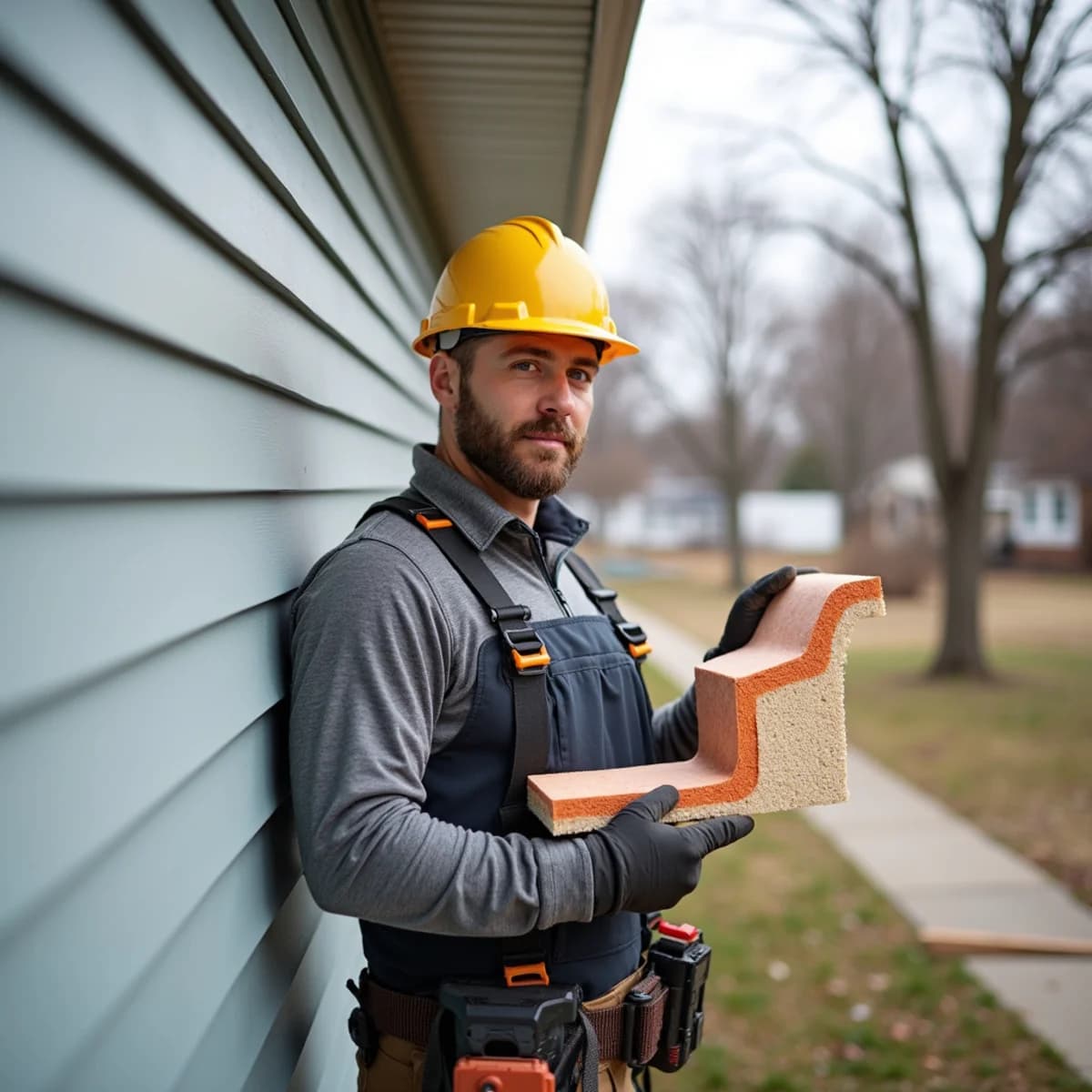
Insulated siding is vinyl siding with rigid foam permanently bonded to the back of each panel, adding R-value directly to your walls. Overcash Siding installs insulated siding on Madison-area homes to improve winter comfort, reduce drafts, add rigidity and impact resistance, and give the exterior a flatter, more finished look.
Standard siding does nothing for your walls thermally — it just sheds water and looks good. Insulated siding changes that by bonding a contoured foam backing to each panel, so the insulation wraps the outside of the home and helps cover the studs, which are weak points for heat loss in a conventional wall.
In a climate where heating season runs half the year, that continuous exterior insulation can improve comfort and take the edge off drafts. It also makes the panels more rigid, so they lie flatter and resist impact and warping. We install insulated siding as part of re-siding projects across Dane County.
Why Homeowners Choose Insulated Siding
- You want better winter comfort and fewer drafts
- Your walls are under-insulated or you feel cold spots
- You want a flatter, more rigid, more impact-resistant wall
- You are already re-siding and want to upgrade energy performance at the same time
How Insulated Siding Helps in Winter
A conventional wall loses heat through the wood studs — a path insulation between the studs cannot block. Insulated siding adds a layer of continuous foam on the outside of the sheathing, helping to cover those thermal bridges and reduce overall heat loss. It also fills the gap behind the panel, which cuts air movement and helps the siding lie flat and quiet.
The energy benefit varies by home, so we will not quote you a fixed savings percentage. What we can say honestly is that continuous exterior insulation is a sound building-science upgrade for our climate, especially on older or under-insulated homes.
Durability Benefits Beyond Energy
The rigid backing does more than insulate. It makes panels stronger and more impact-resistant, helps them resist warping in heat, dampens outside noise, and supports a flatter, straighter appearance across the wall. For many homeowners those everyday benefits are as compelling as the energy improvement.
Our Process
- 1
Energy & Wall Review
We look at your walls and goals to see whether insulated siding is a good fit.
- 2
Barrier & Flashing
Weather barrier and flashing are installed and verified first.
- 3
Install Insulated Panels
Contoured, foam-backed panels are installed to lie flat and manage water.
- 4
Trim & Finish
Trim and finish complete an energy-smart, clean exterior.
What Affects Insulated Siding Cost
Insulated siding costs more than standard vinyl but adds energy and durability value. Drivers:
- Panel R-value & grade
- Higher R-value and premium panels cost more.
- Home size
- Square footage and number of stories drive material and labor.
- Tear-off & prep
- Removing old siding and prepping the wall adds scope.
- Trim & detail
- Corners, trim, and architectural detail affect the total.