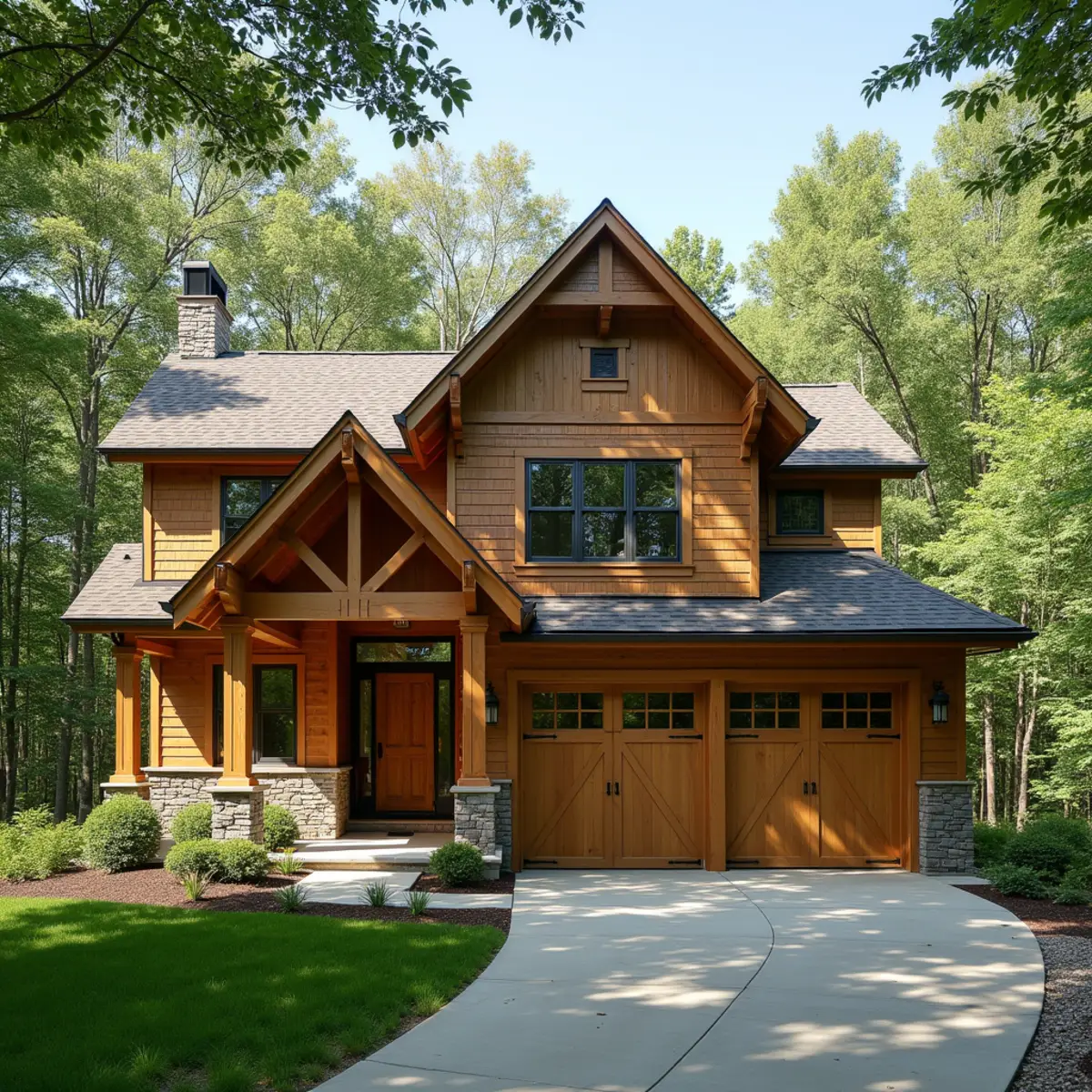
Engineered wood siding, best known as LP SmartSide, is made from wood strands or fibers bonded with resins and treated to resist rot, insects, and moisture. Overcash Siding installs engineered wood on Madison-area homes for homeowners who want an authentic wood look with more durability and impact resistance than natural wood — and a lighter, faster install than fiber cement.
Engineered wood siding gives you the deep grain and warmth of real wood with the performance homeowners actually want in Wisconsin. The manufacturing process treats the product against fungal decay and termites, and the material handles impact — including hail — better than more brittle options.
It sits between vinyl and fiber cement on cost and installs faster than fiber cement because it is lighter and comes in longer lengths, which means fewer seams. Like any wood-based product, it must be installed and finished correctly to keep moisture out and the warranty valid, which is where our experience matters.
Why Homeowners Choose Engineered Wood
- You love the look of real wood but not the maintenance and rot risk
- You want strong impact resistance against hail and debris
- You want a durable upgrade from vinyl without full fiber cement cost
- You like larger panels and fewer seams for a clean look
Engineered Wood vs. Natural Wood
Natural wood siding is beautiful but demanding: it rots, cups, feeds insects, and needs frequent painting or staining. Engineered wood keeps the appearance while the resin treatment and manufacturing address the weaknesses. For most Madison-area homeowners it is a far more practical way to get a wood exterior that lasts.
Performance in Our Climate
LP SmartSide and similar products are engineered for northern climates, with treatment that resists the moisture and freeze-thaw stress that destroys untreated wood. Its impact resistance is a real advantage in a state that sees summer hail. The key, as always, is correct installation and finishing — sealed cut edges, proper fastening, and good flashing — which we handle to spec.
Our Process
- 1
Selection
We help you choose a lap or panel profile and factory or field finish.
- 2
Barrier & Flashing
Weather barrier and flashing go in first, with special attention to cut edges.
- 3
Install & Seal
Panels are fastened to spec and cut edges sealed to protect against moisture.
- 4
Trim & Finish
Trim, caulk, and finish complete a clean, durable wood-look exterior.
What Affects Engineered Wood Siding Cost
Engineered wood typically falls between vinyl and fiber cement. Cost drivers:
- Product & finish
- Pre-finished product costs more than primed-for-paint but saves labor and upkeep.
- Profile & coverage
- Lap, panel, and trim selections affect material use.
- Home size & complexity
- Square footage, stories, and detail drive labor.
- Tear-off & repairs
- Old siding removal and sheathing repairs add scope.