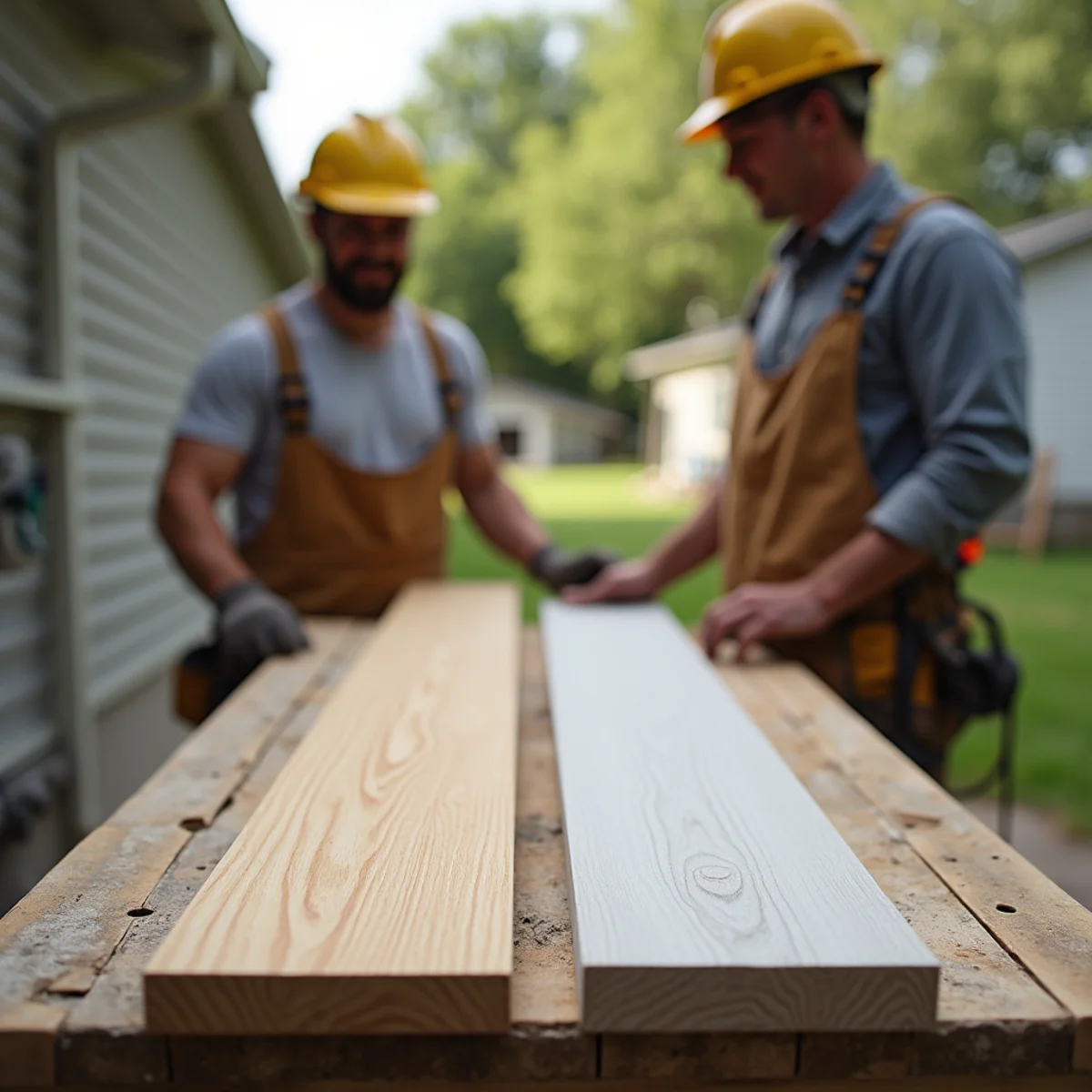
James Hardie fiber cement and LP SmartSide engineered wood are two of the most popular premium siding options in the Madison area, and both hold up well to Wisconsin weather. Hardie is a denser, non-combustible cement-based board that excels at long-term rot and pest resistance, while SmartSide is a lighter engineered-wood product that installs faster, resists impact better, and tends to cost less. The right choice depends on your budget, the look you want, and how you weigh durability against upfront price.
What each product actually is
James Hardie makes fiber cement siding: a blend of Portland cement, sand, and cellulose fibers pressed into planks, panels, and trim. It is heavy, rigid, and non-combustible, and it does not provide food for insects or fungus. Because it is essentially a cement product, it does not expand and contract with temperature the way wood-based materials do, which keeps joints and seams tight over the years.
LP SmartSide is engineered wood siding. It starts with wood strands or fibers that are treated with a zinc borate compound, bound with resins and waxes, and coated. The result is lighter than fiber cement and more forgiving to cut and fasten, with wood-grain textures that many homeowners prefer. The zinc borate treatment runs through the material rather than sitting only on the surface, which is central to how it resists rot and termites.
Both are considered a step up from standard vinyl in durability and appearance, and both are widely used across Dane County. Understanding how they are built explains why they behave differently once they are on your walls and facing a Wisconsin winter.
Cost and installation
SmartSide generally carries a lower material cost than Hardie and installs faster because it is lighter and comes in longer lengths, which means fewer seams and less labor on a typical elevation. For a homeowner watching the budget, that combination often makes engineered wood the more affordable path to a premium look.
Fiber cement is heavier and more brittle to handle, so it usually takes more labor and specialized cutting to control the silica dust it produces. Crews often use dust-reducing blades and follow specific handling practices, and that extra care is part of why Hardie projects can run higher than engineered wood on the same house.
We quote every project after seeing your home, because siding area, trim details, the number of corners and openings, and whether old siding has to be torn off all move the number. Two homes of the same square footage can price differently based on complexity alone, which is why a walk-around beats a phone estimate every time.
Durability and freeze-thaw performance
Both products are engineered for cold climates, but they fail differently. Fiber cement is dimensionally stable and will not rot, but improperly primed cut edges or trapped moisture can lead to edge cracking and, in rare cases, freeze-thaw spalling over many years. Proper flashing, correct gapping, and painting or priming exposed edges are what prevent that.
Engineered wood resists impact and flexes rather than cracks, which is an advantage against hail and stray baseballs. Its weakness is moisture: if the coating is breached and water sits against the material for long periods, swelling can follow. The zinc borate treatment and correct clearances above grade and roofs are what keep it sound through repeated Wisconsin freeze-thaw cycles.
In practice, both materials perform for decades when installed correctly. The difference is in the failure mode. Neglected fiber cement tends to crack and spall at edges, while neglected engineered wood tends to swell where the coating has been compromised. Good installation and basic maintenance address both.
Appearance and maintenance
Hardie offers crisp, low-texture profiles and factory ColorPlus finishes that hold color well and reduce how often you repaint. Many buyers like its clean, modern lines and its non-combustible reputation, and it is available in a wide range of lap, panel, and shingle looks.
SmartSide leans into deep wood-grain textures and traditional lap looks, and many homeowners feel it reads more like real wood from the curb. Both need periodic washing, caulk inspection at joints, and eventual repainting depending on the finish you choose.
Neither is truly maintenance-free, but both need far less attention than natural cedar, which requires frequent sealing and is vulnerable to rot and insects. If minimizing upkeep is a priority, factory-finished versions of either product stretch the interval between repaints considerably.
Warranty and best-use cases
Both manufacturers back their products with strong limited warranties. Read the specific coverage, terms, and transfer rules for the exact product line you choose, since these change over time and vary by finish. Pay attention to what is covered, for how long, and whether the coverage passes to a future owner if you sell.
Choose Hardie when non-combustibility, a very long service life, and a smooth painted look are your priorities and the budget allows. Choose SmartSide when you want a warm wood-grain appearance, better impact resistance, and a lower installed cost. Either can be an excellent choice on a Dane County home when it is installed correctly.
Talk it through with a local installer
The best material for your home depends on details a brochure cannot capture: exposure, roofline, the condition of the existing sheathing, and how long you plan to stay in the house. A product that is ideal for a neighbor may not be the best fit for your walls.
Overcash Siding has installed siding across the greater Madison area since 1978, and we are happy to walk your exterior and lay out the tradeoffs in plain terms. Request a free estimate and we will help you compare Hardie and SmartSide on the numbers and details that matter for your specific home, with no pressure to decide on the spot.