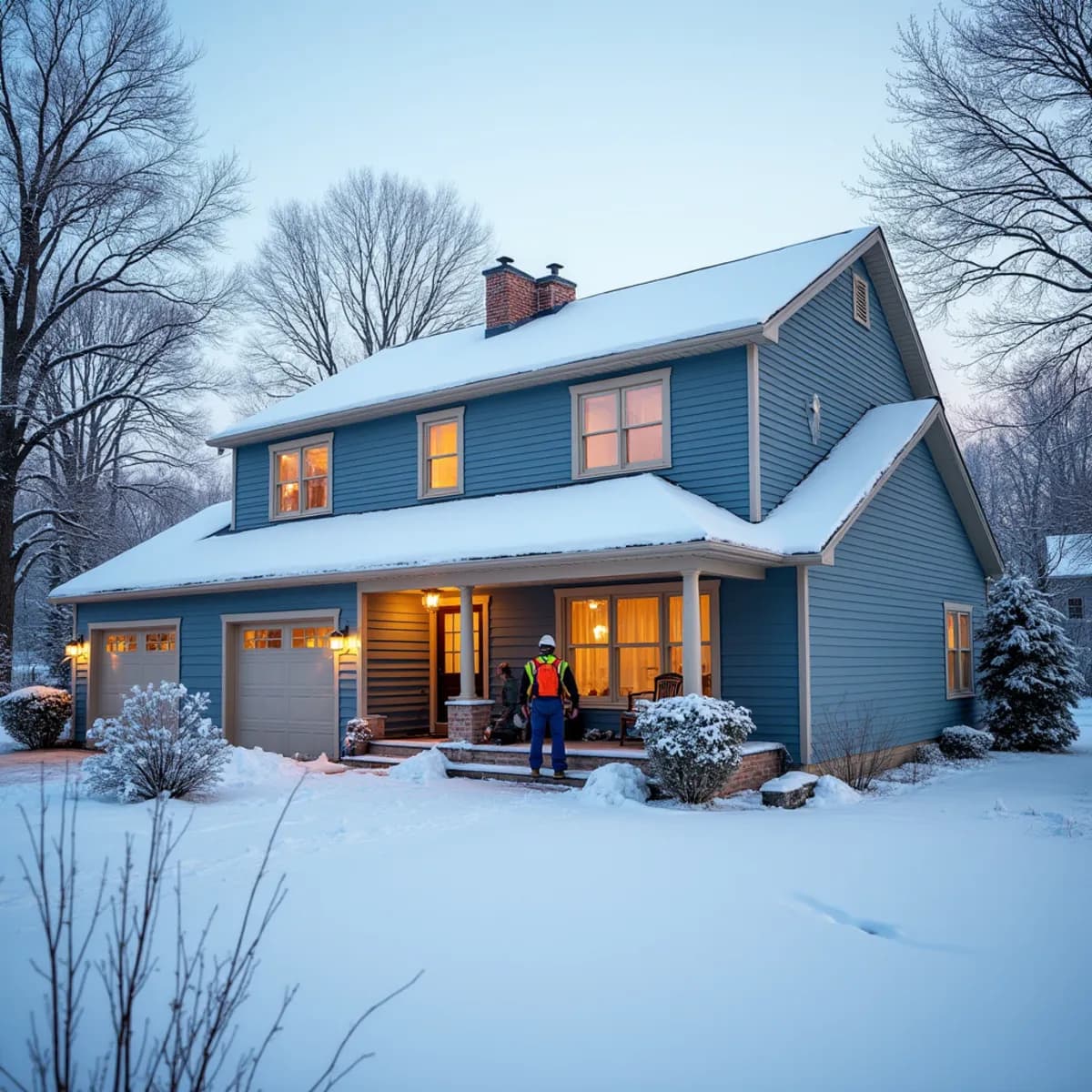
The best siding for Michigan winters is dimensionally stable, sealed against moisture, and installed with proper flashing and house wrap. Fiber cement, engineered wood, and steel all perform strongly through freeze-thaw and wind, and insulated vinyl adds thermal value. Installation quality matters as much as the material you pick.
What Michigan winters do to a wall
Oakland County exteriors face three winter stressors: repeated freeze-thaw cycling, ice dams along the eaves, and wind-driven snow and rain. Each attacks a different part of the wall assembly, and siding is only the outer layer of that defense.
Freeze-thaw is the relentless one. Meltwater enters a gap during a thaw, refreezes overnight, and expands with enough force to crack, spall, or push materials loose. A material that absorbs little water and moves little with temperature wins here.
Ice dams form when attic heat melts roof snow that refreezes at the cold eave, backing water up under shingles and behind fascia. Good soffit, fascia, and flashing keep that water out of the wall. Wind, meanwhile, tests fastening and panel lock strength.
Fiber cement and engineered wood
Fiber cement is dense and dimensionally stable, so it barely moves through temperature swings and does not absorb much water when cut edges are sealed. It is a proven performer on Michigan homes and carries the bonus of fire resistance.
Engineered wood, such as LP SmartSide, resists freeze-thaw through its treated core and sealed surface while weighing far less than fiber cement. The lighter load reduces fastener stress, and its impact resistance shrugs off ice and debris better than brittle materials.
Both need the same care: sealed cut ends, correct fastener spacing, and flashing at every penetration. Installed to spec, either will outlast several Michigan winters without freeze-thaw failure.
Steel and insulated vinyl
Steel siding is nearly immune to freeze-thaw because it does not absorb water at all, and it handles wind and impact extremely well. Its finish is engineered for cold-climate durability, making it a strong, low-maintenance option for exposed Oakland County lots.
Insulated vinyl bonds a rigid foam backing to the panel, adding an R-value boost and stiffening the siding against wind and cold-weather cracking. It resists the brittleness that can affect thin standard vinyl in deep cold.
Both are legitimate winter choices. Steel leans toward maximum durability; insulated vinyl leans toward thermal comfort and budget. Your priorities and wall condition decide which fits.
Why installation decides winter performance
The best material fails if the wall behind it leaks. House wrap must be lapped correctly to shed water, flashing must divert it at windows, doors, and rooflines, and cut edges must be sealed so freeze-thaw cannot exploit them.
Fastening matters in wind. Panels driven too tight cannot move with temperature and buckle or crack; driven too loose, they rattle free in a storm. Correct spacing and nail depth are climate-specific skills a local crew brings.
Soffit and fascia tie into the same system. Blocked soffit vents worsen ice dams; damaged fascia lets meltwater in. Winter durability is the whole assembly working together, not one heroic panel.
Choosing for your Novi home
If you want maximum durability and fire resistance, look at fiber cement or steel. If you want a warm wood look with easy repairs and a lighter wall load, engineered wood is hard to beat. If thermal comfort and budget lead, insulated vinyl delivers.
The deciding factors are your wall condition, exposure, budget, and how long you plan to stay. A specialist who works in Oakland County every winter can match the material to your specific exposure and roofline.
To find the right cold-climate siding for your home, call Overcash Siding or request a free estimate and we will assess your walls and recommend the best fit.