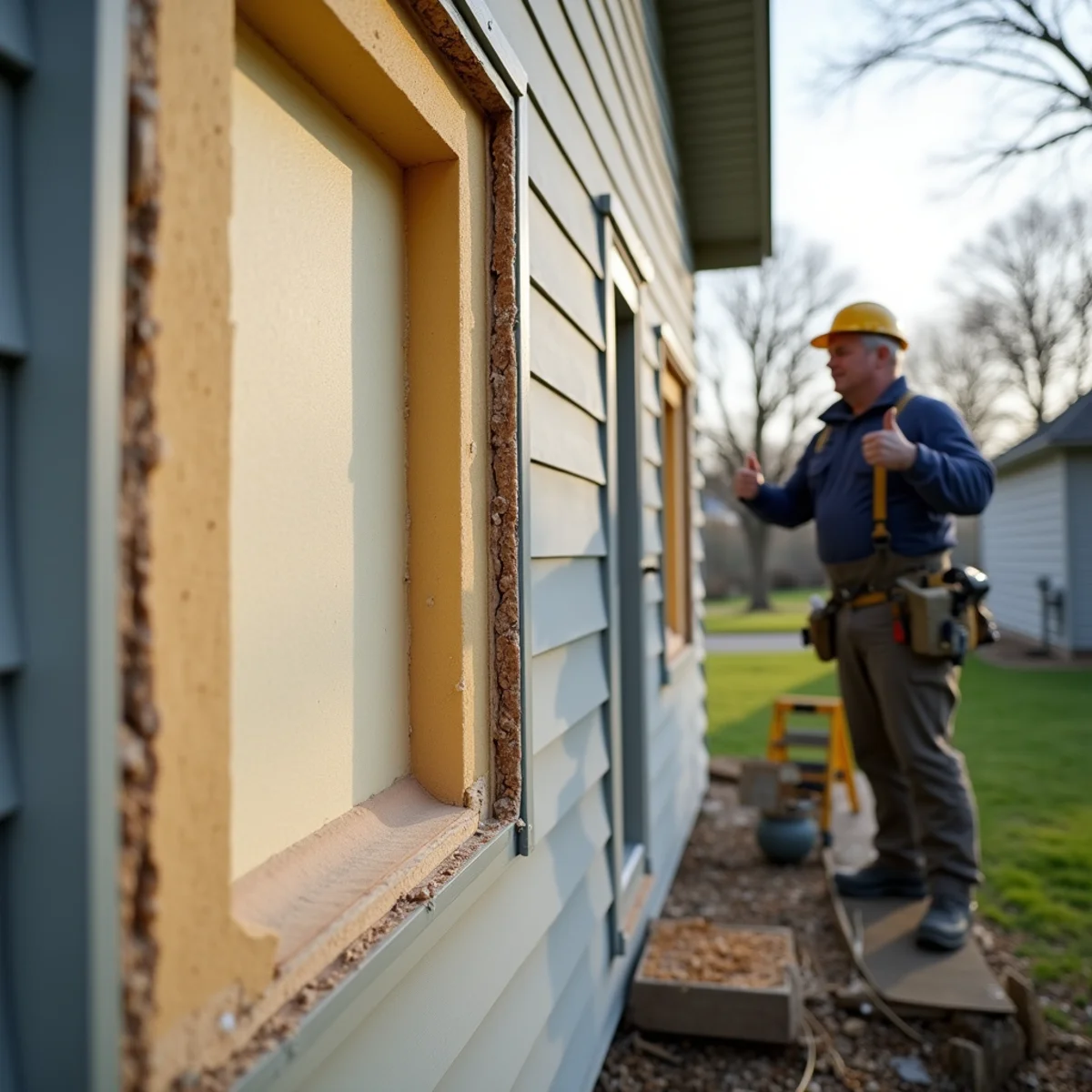
Insulated siding adds a layer of rigid foam behind the panel, which raises the wall’s effective R-value and helps reduce thermal bridging through the studs. In a Wisconsin winter, that can improve comfort and trim heat loss through the walls. It is not a guaranteed fixed savings percentage, because your results depend on your existing insulation, air sealing, windows, and heating system.
What R-value really measures
R-value is a material’s resistance to heat flow: the higher the number, the slower heat escapes through it. Insulated siding adds its own R-value on top of whatever insulation is already in your walls, contributing to the overall performance of the assembly.
On its own, the foam backer’s R-value is modest compared to the insulation inside your wall cavity. Its bigger contribution is not the number alone but where it sits: as a continuous layer across the outside of the wall, in front of the framing.
It also helps to understand that R-value describes resistance to conductive heat flow, not air leakage. A wall can have a high R-value and still feel drafty if it leaks air. Insulated siding is one layer of a larger system, and it works best alongside good air sealing and attic insulation.
Thermal bridging and why continuous insulation helps
Wood studs conduct heat far better than the insulation between them, so heat escapes through the framing even in a well-insulated wall. This is called thermal bridging, and it can noticeably lower a wall’s real-world performance below what the cavity insulation alone would suggest.
Continuous insulation, like the foam on insulated siding, covers the studs from the outside and interrupts those bridges. That is why a continuous layer often does more for comfort than its R-value number alone suggests, because it addresses a weak point that cavity insulation cannot reach.
In an older home with 2x4 walls and limited cavity insulation, reducing thermal bridging can make a meaningful difference in how even and comfortable the interior feels along exterior walls.
You can often feel thermal bridging without any instruments. On a very cold day, the wall feels colder directly over a stud than over the insulated cavity between studs. Continuous exterior insulation evens that out, which is why the benefit shows up as comfort as much as as a number on a bill.
How insulated siding compares to standard siding
Standard vinyl is hollow behind the panel, so it relies entirely on your wall’s existing insulation for thermal performance. Insulated vinyl fills that space with a contoured foam backer, which adds the continuous insulation layer, stiffens the panel, and helps it lie flat against the wall.
That structural difference is why insulated panels resist impact better in the cold and often look straighter over long runs. You are paying more per square foot, but you are getting a more substantial product, not just siding with a thin insulation bonus.
What this means for your winter bills
By reducing heat loss through the walls and softening thermal bridging, insulated siding can help your furnace work less to hold a steady temperature, which may show up as lower heating bills and fewer cold spots along exterior walls.
We will not promise a specific percentage, because honest savings depend on your whole home. A house with poor attic insulation or major air leaks will see different results than one that is already reasonably tight. Walls are one piece of the building envelope, and the roof, windows, and air sealing all play a role too.
A helpful way to think about it: insulated siding rarely transforms your bills on its own, but it removes one weak point in the envelope. If your walls are your home’s biggest heat-loss area, the improvement can be noticeable; if the attic or windows are the real culprits, address those too for the best result.
Other benefits beyond the thermostat
The foam backing also makes panels more rigid and impact-resistant, which is helpful in Wisconsin’s cold when hollow vinyl can become brittle. It gives siding a straighter, fuller appearance because the backer supports the panel against the wall.
Insulated siding can also modestly dampen outside noise. For many homeowners, the combination of comfort, durability, and appearance is as compelling as the potential energy savings.
The added rigidity is a real winter advantage in Wisconsin, where hollow vinyl is at its most brittle in deep cold. A panel backed by foam resists impact and stays flatter against the wall, which helps it look good and perform well through many seasons of freeze and thaw.
For homeowners weighing comfort, curb appeal, and durability together, those secondary benefits often tip the decision. Even when the energy math is modest, a stiffer, better-looking, quieter wall is an easy thing to appreciate every day you live with it.
Is insulated siding right for your home?
Insulated siding makes the most sense when you are already replacing siding and want to improve the wall’s performance at the same time, since the labor is largely the same and you gain the added benefits for the incremental material cost.
If you are not replacing siding yet, there are often cheaper ways to save energy first, such as air sealing and adding attic insulation. Insulated siding shines when the siding is due for replacement anyway and you want to capture a wall-performance upgrade in the same project.
Overcash Siding has installed siding across the greater Madison area since 1978 and can explain how insulated siding fits with your existing insulation and goals. Request a free estimate to talk through the options for your home.