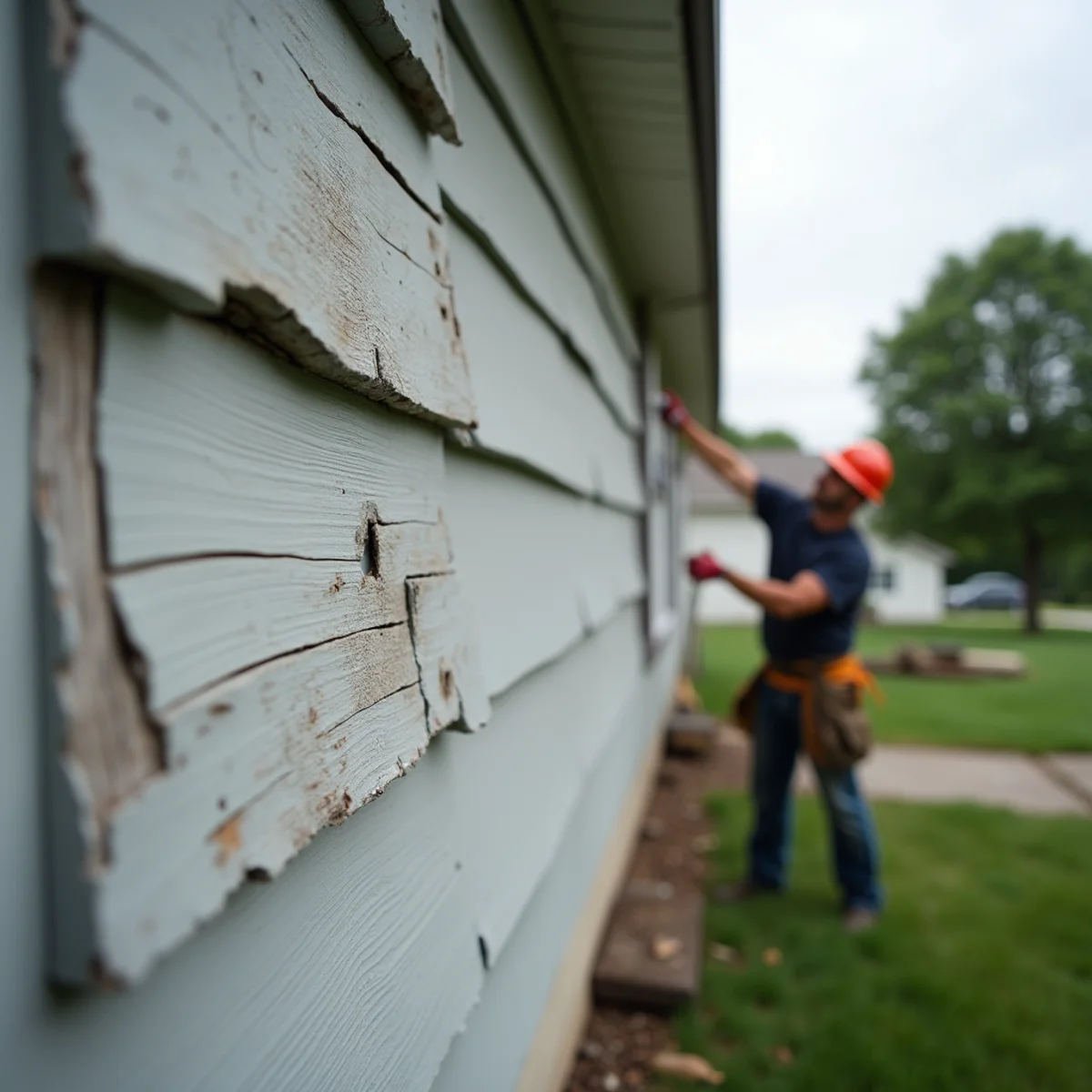
The clearest signs you need new siding include warping or buckling panels, cracks and holes, rot or soft spots, peeling interior paint or wallpaper, frequent repainting, visible moisture or mold, and rising energy bills. One sign alone may only call for a repair, but several together usually point to replacement. A professional inspection tells you which path makes sense.
1. Warping, buckling, or loose panels
Panels that wave, bulge, or pull away from the wall have usually lost their fastening or absorbed moisture. On a Wisconsin home, that lets wind-driven snow and rain reach the sheathing behind the siding, where it can do far more expensive damage.
Isolated warping can sometimes be repaired, especially if it is limited to one area from a specific cause. But widespread buckling across multiple walls is a replacement signal, because it usually means the material or its installation is failing broadly.
Loose panels also let wind in, which can accelerate the problem: once air and water get behind a section, they work at the fasteners and adjacent panels, and small movement becomes a spreading failure over a season or two.
2. Cracks, holes, and gaps
Cracks from impact, age, or brittleness in cold weather open a path for water and pests. Even small openings matter in Wisconsin, where moisture that gets in can freeze, expand, and enlarge the crack over the winter.
Small, isolated damage is often repairable, but a pattern of cracking across many panels means the material is at the end of its service life and patching becomes an endless chase.
Watch especially for cracks that radiate from fastener heads or that follow the same line across several panels. That pattern usually points to age or brittleness rather than a one-time impact, and it tends to keep spreading as the material continues to cycle through Wisconsin’s cold.
3. Rot, soft spots, or crumbling
Press gently on the siding and trim, especially near the ground and around windows. Soft, spongy, or crumbling areas indicate rot or long-term moisture damage that has likely spread to what is behind the siding.
Rot rarely stays put. By the time it is visible on the surface, it has often reached the trim, sheathing, or framing, which is why soft spots warrant a prompt inspection rather than a wait-and-see approach.
Pay particular attention to the lower courses near grade and to the corners and joints, where water tends to collect. These are the spots where rot usually starts, and finding it early can mean the difference between a modest repair and a major one.
4. Peeling paint or wallpaper inside
When interior paint bubbles or wallpaper peels, moisture may be passing through failing siding and the wall assembly. It is an easy sign to miss because homeowners naturally blame the paint rather than the exterior of the home.
If interior finishes on exterior walls keep failing despite fresh paint, it is worth checking whether the real cause is water getting through the siding. The same goes for musty odors or damp patches that appear near exterior walls after heavy weather, which can point to moisture moving through a failing exterior.
5. You are repainting far too often
Siding that holds a finish should not need repainting every few years. If you are constantly repainting to keep up appearances, the material may be failing or reaching the end of its life.
New siding with a durable factory finish can end that cycle, giving you years of good looks without the recurring cost and labor of repainting. For many homeowners, that alone justifies replacement.
Frequent repainting on wood or hardboard siding can also be a sign the material is absorbing moisture, which is a deeper problem than appearance. When paint will not hold because the surface behind it keeps swelling and drying, no amount of repainting truly fixes it.
6. Mold, mildew, or moisture stains
Persistent mold, mildew, or dark moisture stains, particularly at seams and corners, suggest water is getting trapped where it should not be. Surface growth can sometimes be cleaned, but recurring stains point to a drainage or flashing problem.
It is worth investigating before it reaches framing, because moisture problems tend to worsen quietly until they become structural. Mold on north-facing or shaded walls is common and often just surface growth, but when it returns quickly after cleaning, treat it as a signal that water is not draining the way it should.
7. Rising energy bills and drafts
Older or damaged siding, especially without insulation, can let conditioned air escape and allow cold air in. If your heating bills climb and rooms feel drafty despite a working furnace, the exterior envelope may be part of the problem.
Replacing failing siding, particularly with an insulated product, is a chance to improve comfort along the exterior walls while you address the appearance and protection of your home.
Energy bills alone rarely justify a full replacement, but combined with any of the other signs on this list, they add to the case. When siding is failing on multiple fronts, addressing everything at once is usually smarter than paying for the same walls twice.
Not sure which signs apply to your home?
Some of these issues call for a targeted repair, while several together usually mean replacement is the smarter investment. Telling them apart from the ground is hard, since the most important damage is often hidden.
Overcash Siding has helped greater Madison homeowners make that call since 1978. Request a free estimate and we will inspect your exterior and give you an honest recommendation, whether that is a simple repair or a full replacement.