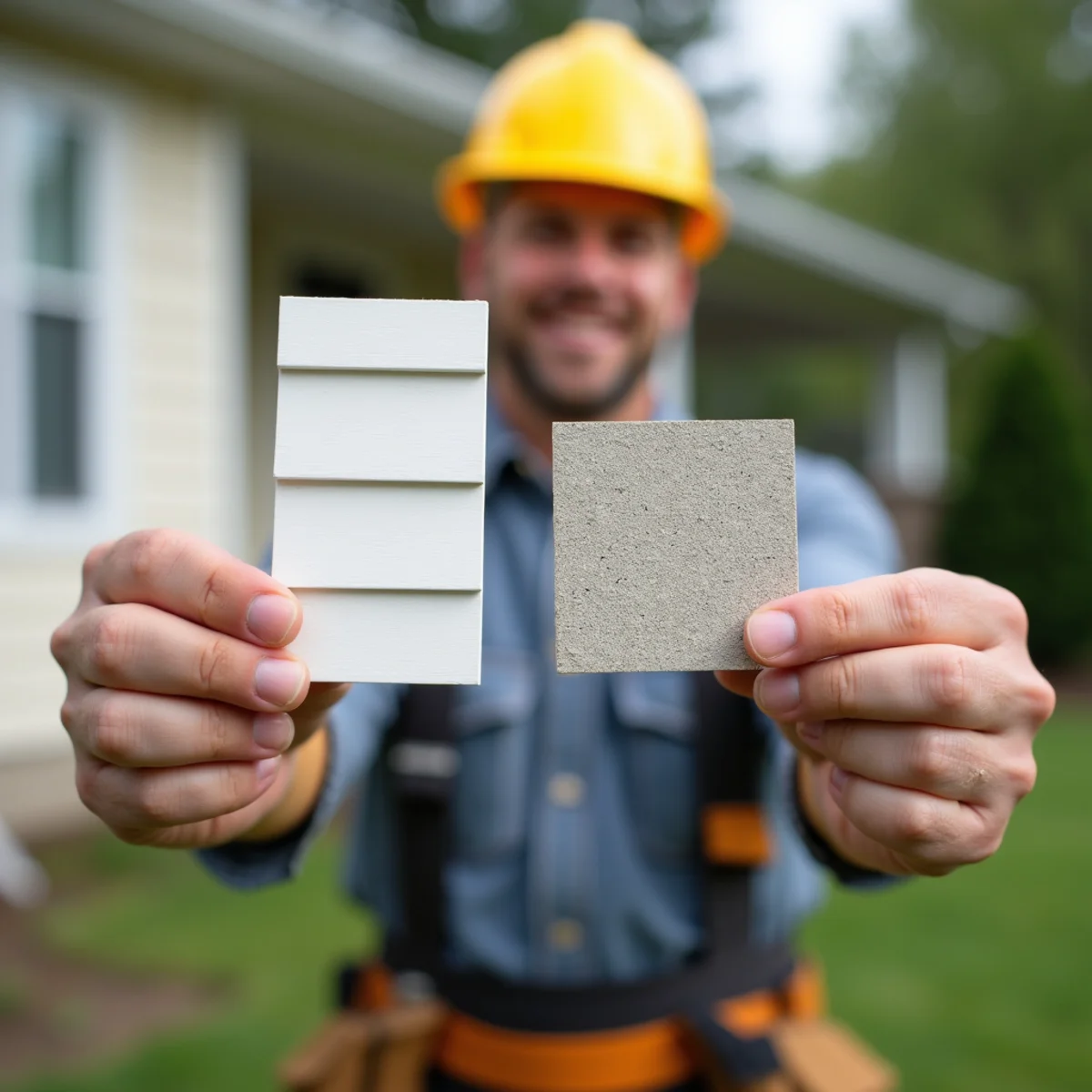
Vinyl siding is the more affordable, lower-maintenance choice, while fiber cement costs more but offers a higher-end look, non-combustibility, and a very long service life. Vinyl is lighter and faster to install; fiber cement is heavier, more rigid, and needs periodic repainting depending on the finish. The right pick comes down to your budget, the look you want, and how long you plan to stay in the home.
Cost
Vinyl is generally the most affordable siding to buy and install. It is light, comes in long panels, and goes up quickly, all of which keep labor down. For homeowners focused on getting a fresh, protected exterior at the lowest reasonable price, vinyl is hard to beat.
Fiber cement carries a higher material price and takes more labor because it is heavy and requires careful cutting to manage dust. If upfront budget is the main constraint, vinyl wins; if you are investing for the long term and want a premium result, fiber cement can justify the added cost.
It is also worth separating cost from value. Vinyl gives you the lowest entry price, while fiber cement spreads a higher price over a longer service life. Neither is simply better on cost; the right answer depends on how long you plan to stay in the home and what you want the exterior to do for its resale appeal.
For a starter home or a rental, keeping the upfront cost down with vinyl often makes the most sense. For a long-term home where you want a premium look and decades of service, the extra money for fiber cement is easier to justify because you spread it over many more years of ownership.
Durability and climate performance
Fiber cement is dimensionally stable, non-combustible, and resistant to rot and pests. It commonly lasts several decades and holds up well to Wisconsin’s cold when installed correctly. Vinyl resists moisture inherently and never rots, but older thin vinyl can crack under hard impact in cold weather.
Fire behavior is one clear divide between them. Fiber cement is non-combustible, while vinyl can melt or burn when exposed to enough heat, such as a nearby grill or a neighbor’s fire. For some homeowners that distinction is a meaningful point in fiber cement’s favor, independent of climate performance.
Thicker and insulated vinyl closes much of that gap, adding rigidity and impact resistance. Both perform well through Wisconsin freeze-thaw cycles when installed with proper flashing, so the durability question is often about the specific product grade and the quality of installation rather than the category alone.
One practical difference: vinyl damage is often repaired by swapping individual panels, while fiber cement repairs involve cutting, fitting, and painting to blend the fix. Neither is hard for an experienced crew, but it is a small factor to weigh if your home is prone to impacts from equipment, sports, or falling branches.
Appearance
Fiber cement delivers crisp lines, deep profiles, and a substantial feel that closely mimics wood. It takes paint well and holds factory finishes for years, and it is a common choice for homeowners who want a high-end, architectural look.
Vinyl has improved dramatically, with richer colors, better textures, and profiles that look far more convincing than older generations. Up close it still reads as a lighter product, but from the curb, quality vinyl looks clean and attractive. If you want the most authentic wood look, fiber cement offers more; if you want a wide color palette with no repainting, vinyl is appealing.
Fiber cement also opens up design options that vinyl cannot match easily, such as wide plank exposures, board-and-batten looks, and crisp painted trim in contrasting colors. For homeowners chasing a specific architectural style, that flexibility is part of what justifies the premium.
Maintenance
Vinyl is close to maintenance-free: an occasional wash keeps it looking good, and the color runs through the material so scratches are far less noticeable. There is no repainting to schedule or pay for.
Fiber cement needs periodic repainting depending on the finish, plus caulk inspection at joints. Factory-finished lines stretch the repaint interval considerably, but it remains a low-maintenance rather than no-maintenance product. Budget for occasional upkeep over its long life.
For both materials, a yearly rinse and a quick look at caulk lines and flashing goes a long way. Catching a failed bead of caulk before winter is far cheaper than dealing with the moisture it lets in, regardless of which material sits on your walls.
Which should you choose?
Choose vinyl for the best combination of low cost and low maintenance, especially insulated vinyl if efficiency and comfort matter to you. It is a practical, proven choice for many Wisconsin homes.
Choose fiber cement when you want a premium, wood-like appearance and maximum longevity and the budget allows for the higher upfront cost. Many homeowners find the decision comes down to how long they plan to stay and how much they value the look, rather than to durability alone, since both materials perform well in Wisconsin when installed correctly.
There is no universally right answer, only the right answer for your home and goals. Seeing samples of each in person, on your own house and in your own light, often makes the choice clearer than any spec sheet can. Overcash Siding installs both across the greater Madison area and has since 1978. Request a free estimate and we will help you weigh the tradeoffs for your specific home.