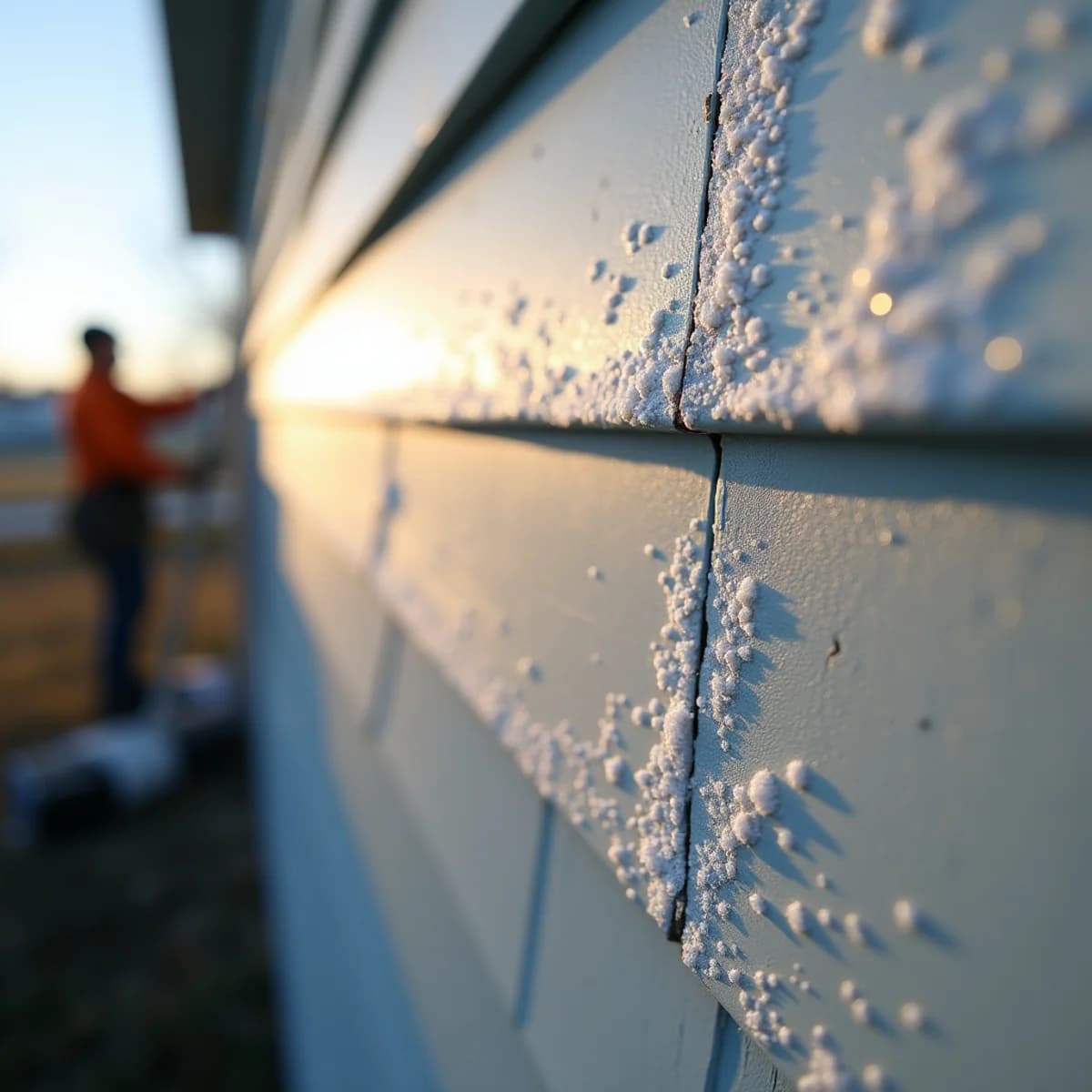
Freeze-thaw damage happens when water works into cracks, seams, and porous materials, freezes, and expands by roughly nine percent, prying the material apart a little more with each cycle. In Wisconsin, siding can go through dozens of these cycles a year. Materials that absorb little water and are installed with tight flashing, such as vinyl, fiber cement, engineered wood, and steel, resist it far better than aging or poorly sealed siding.
The mechanism, step by step
Water is unusual: it expands as it freezes. When liquid water sits in a crack, an unsealed edge, or the pores of a material and the temperature drops below freezing, that water turns to ice and pushes outward with real force, on the order of thousands of pounds per square inch.
When it thaws, the space it created stays slightly larger, and more water can move in on the next wetting. Repeat that dozens of times over a Wisconsin winter and small flaws grow into cracks, delamination, and spalling. The damage is cumulative, which is why a minor crack ignored one fall can become a real problem by spring.
The cycle is most active during the shoulder seasons, when daytime temperatures rise above freezing and nights drop back below it. A sunny late-winter afternoon can melt snow and ice against the siding, and that meltwater refreezes overnight, running the cycle on a daily basis for weeks.
Where water gets in
The usual entry points are failed caulk at joints, unflashed or poorly flashed window and door openings, cracks from impact, unsealed cut edges on fiber cement, and gaps where siding meets trim or the roofline.
Once water is behind the siding, it can also attack the sheathing and framing, which is why freeze-thaw problems are often worse than they look from the outside. What appears to be a small surface crack can indicate a wet wall assembly that is quietly deteriorating.
Nail and screw penetrations are another quiet culprit. Every fastener is a small hole, and if the surrounding material is not sealed or the fastener was driven too tight, water can collect there and freeze, working the opening a little larger each winter until the panel loosens or cracks.
Areas that trap snow, such as the base of walls and spots below rooflines, see more moisture exposure and tend to show freeze-thaw damage first.
Gutters and downspouts play a supporting role. When they overflow or drain against a wall, they keep siding wet far longer than it should be, feeding the freeze-thaw cycle right where the material is most exposed. Keeping water moving away from the house is part of protecting the siding.
Which materials resist it
Vinyl absorbs essentially no water, so it is inherently resistant to freeze-thaw, though brittle old vinyl can still crack from cold impact. Fiber cement is dense and stable, and resists freeze-thaw well when cut edges are primed and gapping is correct.
Engineered wood is treated and coated to shed water and flexes rather than cracks, so it tolerates the cycle when its coating is maintained. Steel does not absorb water at all and will not crack in the cold.
Natural wood and cheap, aging products are the most vulnerable because they soak up moisture readily, giving freeze-thaw plenty of water to work with. Upgrading a failing wood or old vinyl exterior to a modern material is often the most durable fix.
No material is completely immune, though. Even water-resistant products can suffer freeze-thaw damage at fasteners, seams, and cut edges if those spots are not detailed correctly. The material choice sets the ceiling for durability, but the installation determines whether you actually reach it.
Signs freeze-thaw is already at work
Look for hairline cracks that grow longer each spring, paint or coating that flakes near edges and seams, and panels that feel loose or sound hollow when tapped. On fiber cement, small chips or flaking at corners and cut ends are early signs that moisture has begun working into the material.
Catching these signs in fall, before the heaviest freeze-thaw stretch, gives you the best chance to seal and repair before minor flaws widen. Waiting until spring often means the same crack has grown and let more water into the wall over the winter.
How good installation stops it
The single best defense is keeping water out in the first place. That means a quality weather-resistive barrier, proper flashing at every opening, correct gapping and fastener spacing, primed edges on fiber cement, and clearances above grade and roofs so snow does not pile against the siding.
Maintenance matters too: inspecting and renewing caulk, clearing debris that traps moisture, and addressing cracks promptly keeps small issues from becoming freeze-thaw failures. A wall that stays dry simply has nothing for the freeze-thaw cycle to attack.
It also helps to give siding room to breathe and drain. Modern installation practices leave a drainage path behind the siding so any incidental moisture can escape rather than sit trapped against the material through a hard freeze. This is one of the quiet upgrades a quality installation provides.
Worried about winter damage?
If you are seeing cracks, gaps, or moisture stains heading into another Wisconsin winter, it is worth an inspection before the freeze-thaw cycle makes it worse. Catching a problem in the fall is far cheaper than repairing an expanded one in the spring.
Overcash Siding has protected greater Madison homes since 1978. Request a free estimate and we will assess your exterior and recommend targeted repairs or replacement as needed.