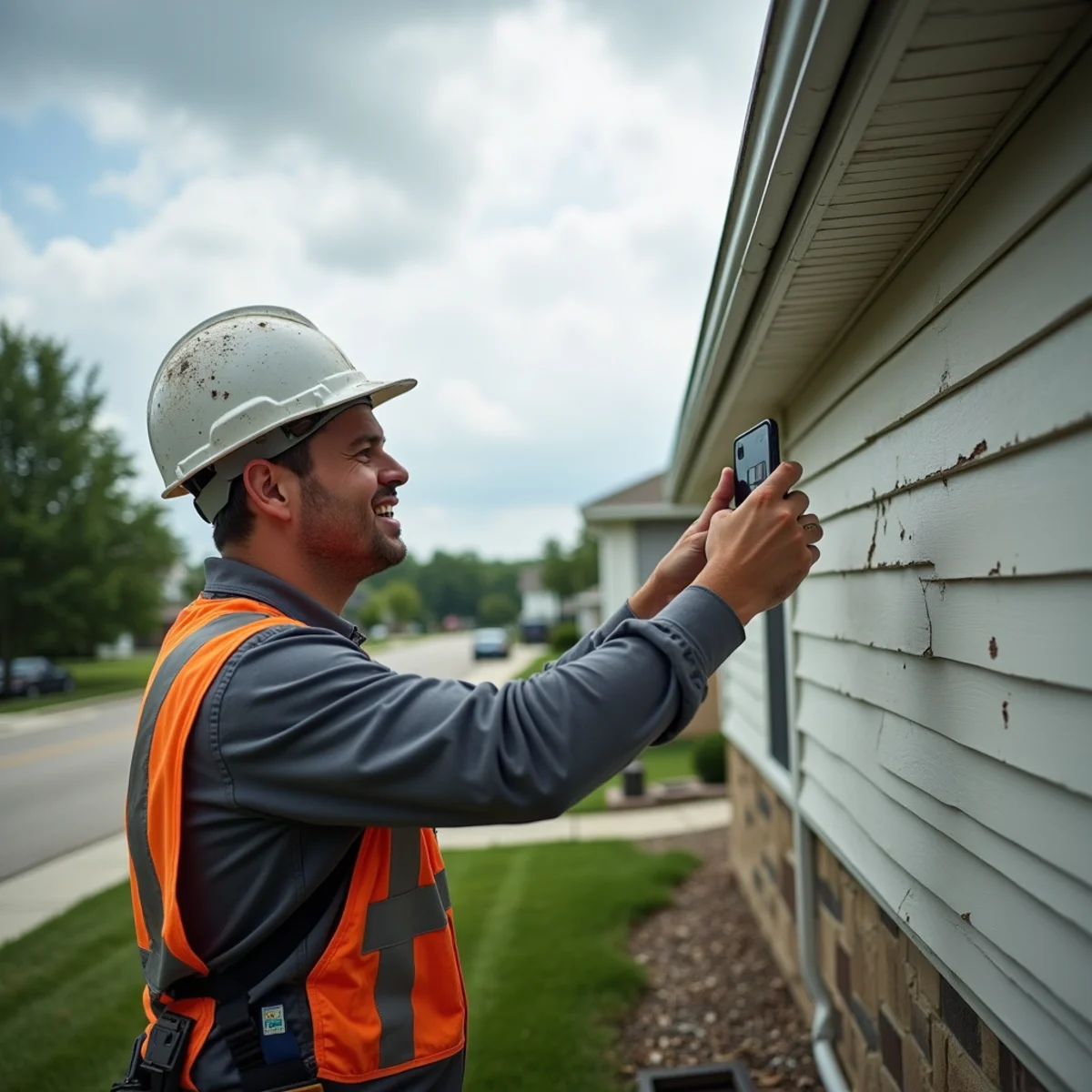
Most Michigan homeowners policies cover sudden storm and hail damage to siding, subject to your deductible and policy terms. Coverage usually applies when the damage is from a specific storm event rather than gradual wear. Document the damage promptly, review your policy, and get a professional inspection before you file. Always confirm specifics with your own insurer.
What policies typically cover
Standard homeowners policies generally cover sudden, accidental damage from named perils, which usually include hail and windstorms. When a spring or summer storm dents, cracks, or holes your siding, that sudden event is the kind of loss most policies are designed to address.
What policies generally do not cover is gradual deterioration: age, fading, wear, or damage from deferred maintenance. Insurers distinguish a storm event from slow decline, so the timing and cause of the damage matter.
Every policy is different. Deductibles, coverage limits, and any cosmetic-damage exclusions vary. Read your declarations page and call your insurer to confirm how your specific policy treats hail before assuming anything.
Recognizing hail damage on siding
Hail damage is not always obvious from the ground. On vinyl, look for cracks, chips, and small holes, often on the storm-facing elevation. On fiber cement and wood, look for chips, cracks, and dislodged sections. Dents show clearly on steel and aluminum.
Check collateral clues that confirm a hail event: dents on gutters, downspouts, AC fins, and metal vents, and dings on the deck or fence. These help establish that hail actually struck the property.
Damage on the sides facing the storm’s approach is common. A methodical elevation-by-elevation look, ideally by someone experienced, catches damage a quick glance misses.
Documenting a claim
Act promptly. Note the storm date, photograph every damaged area with wide and close shots, and keep any local weather or news references to the storm. Timely documentation supports that the loss came from a specific event.
Do not throw away damaged pieces before your insurer has seen them, and make only temporary repairs needed to prevent further damage, keeping receipts. Permanent repairs before inspection can complicate a claim.
A written contractor inspection report that describes the damage and its likely cause strengthens your file. It gives the adjuster a professional second set of eyes on what happened.
Working with your adjuster
After you file, the insurer assigns an adjuster to inspect and estimate the loss. Having your own documentation and a contractor present for that inspection helps ensure damage is not overlooked and the scope is complete.
If the adjuster’s estimate seems to miss areas, you can point to your photos and the contractor’s report. Reasonable, documented discrepancies can usually be discussed and reconciled.
Keep every document, email, and estimate organized. A clean paper trail makes the process smoother from filing to final payment.
After the claim: getting the work done
Once your claim scope and payment are settled, you choose the contractor. You are not obligated to use anyone the insurer suggests; the decision is yours as the homeowner.
A local specialist can match materials and profiles so repairs blend with existing siding, and can flag any storm damage to soffit, fascia, or flashing that should be part of the scope.
Overcash Siding provides free estimates for storm and hail damage across Novi and Oakland County and can inspect your home after a storm. Call or request a visit to document the damage and plan repairs. We are not your insurer, so confirm coverage details directly with your policy.