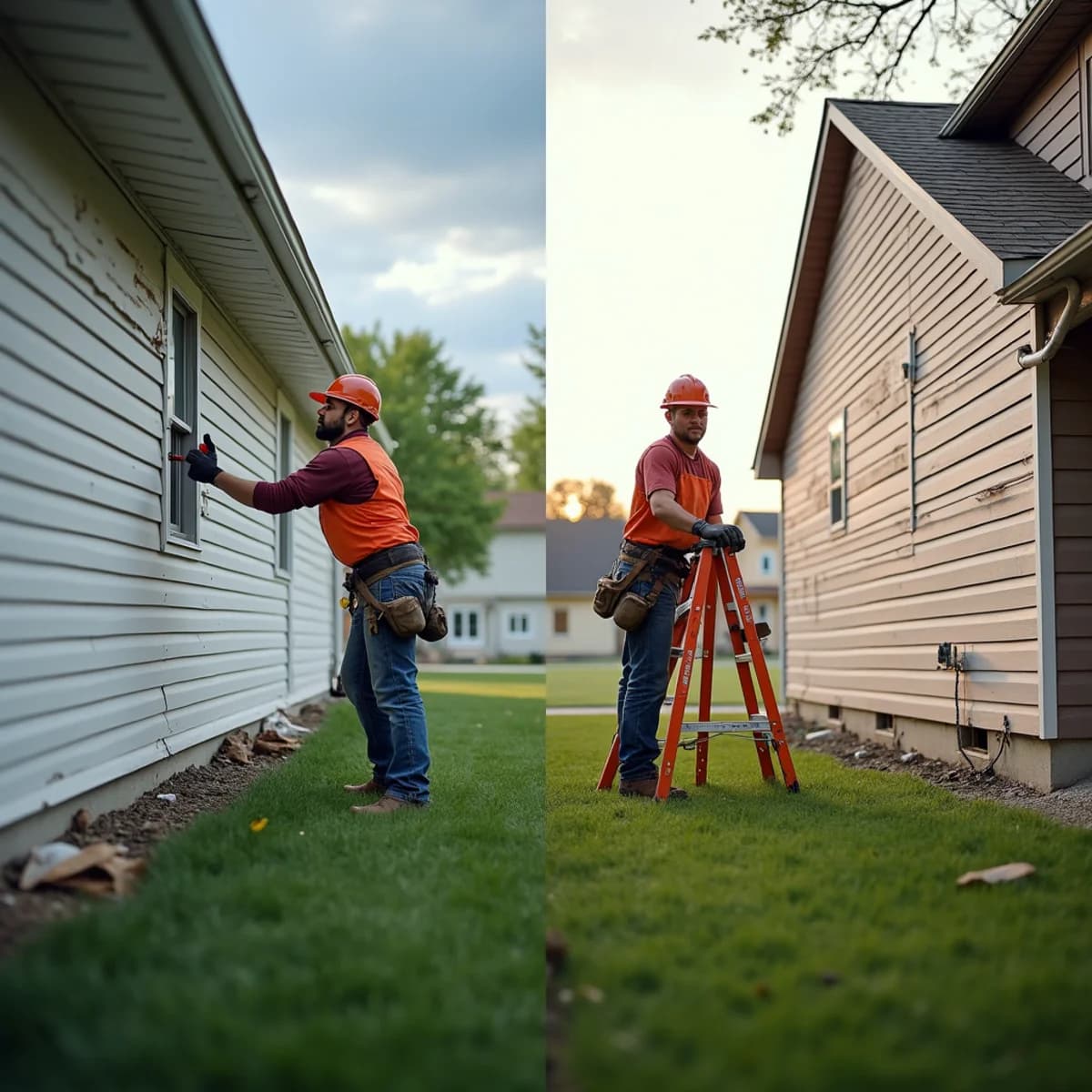
Repair usually makes sense when damage is isolated, the siding is relatively young, and matching material is available. Full replacement is the smarter choice when damage is widespread, the siding is near the end of its life, there is moisture damage behind it, or you are repairing the same areas again and again. Weighing extent, age, and long-term cost points you to the right answer.
How widespread is the damage?
A few cracked or dented panels from a storm or an impact are a classic repair. When the damage is contained and the rest of the siding is sound, fixing the affected area is the practical, cost-effective move.
Start by looking at whether the damage is truly localized or just the most visible part of a broader problem. A single cracked panel from a ladder bump is different from a cracked panel on a wall where several others are also brittle and failing. The cause tells you a lot about whether a repair will hold.
But when damage spans multiple walls, or when warping and cracking appear across the whole home, patching becomes a losing game. At that point you are spending repeatedly to prop up a system that is failing broadly, and replacement is usually more cost-effective.
A useful rule of thumb: if the damaged area is a small fraction of the total and the rest is sound, lean toward repair. As the share of affected siding grows, or as the same problems keep appearing in new spots, the math tips steadily toward replacement.
How old is the siding?
On siding with many good years left, a targeted repair protects your investment and keeps the home looking consistent. There is no reason to replace a whole exterior over one damaged section if the rest is in good shape.
On siding near the end of its expected lifespan, though, spending on repairs often just delays an inevitable replacement. You lose that repair money when the rest of the siding fails soon after, so it can be smarter to put those dollars toward the full project.
Age also affects how well a repair will hold. Older siding that is already brittle or weathered is harder to work with and more likely to be damaged again nearby, whereas replacement gives you a fresh, uniform exterior that starts a new lifespan all at once.
Can the material be matched?
Repairs look best when replacement panels match the existing color and profile. New siding blends in and the fix becomes nearly invisible, which preserves your home’s appearance.
Older or discontinued products can be hard to match, and sun-faded siding rarely matches new material exactly even when the same product is still made. If a patch will stand out badly on a prominent wall, replacement may be the better route for both appearance and resale value.
One workaround for a visible mismatch is to reface a single elevation completely, using the repair as an opportunity to update the most street-facing wall. Whether that makes sense depends on cost and how noticeable the difference would be, which is worth talking through before you decide.
Is there damage behind the siding?
If moisture has reached the sheathing or framing, a surface repair does not solve the real problem; it just hides it. Water that keeps getting in will continue to damage the structure under fresh-looking siding.
Widespread rot or persistent leaks usually call for removing the siding, correcting what is underneath, and starting fresh so the issue does not return. This is where a proper inspection pays off, because the hidden condition often drives the decision.
Consider how long you will stay
Your plans for the home should factor into the decision. If you expect to move within a couple of years, a sound repair that restores appearance and keeps water out may be the practical choice, letting the next owner tackle any eventual full replacement.
If this is your long-term home, replacement often makes more sense once siding starts failing, because you will be the one living with repeated repairs. Investing once in a durable exterior can be more satisfying and cost-effective than patching year after year.
The market can factor in too. Buyers notice an exterior that looks tired or patched, and fresh siding can strengthen a listing, while a sound repair may be all that is needed if the siding is otherwise in good shape. Weigh the cost against what the improvement actually adds for your situation.
Run the long-term math
Add up what you have already spent on repairs and what the next few are likely to cost. If you are repeatedly fixing the same problems, or the repairs approach a meaningful share of replacement cost, replacement often wins on value and peace of mind.
Replacement also lets you upgrade to a more durable material or add insulation while the walls are open, benefits a patch cannot offer. And a fresh, uniform exterior can improve curb appeal and resale value in a way that a visible patch cannot, which is worth factoring into the decision on a home you may sell.
There is no single threshold that fits every home. The right choice balances the extent of damage, the siding’s age, how well a repair will match and hold, and your plans for the property. When several of those point the same direction, the answer usually becomes clear.
Overcash Siding has helped greater Madison homeowners decide between repair and replacement since 1978, and we will tell you honestly when a repair is enough. Request a free estimate and we will inspect your siding and lay out your options.