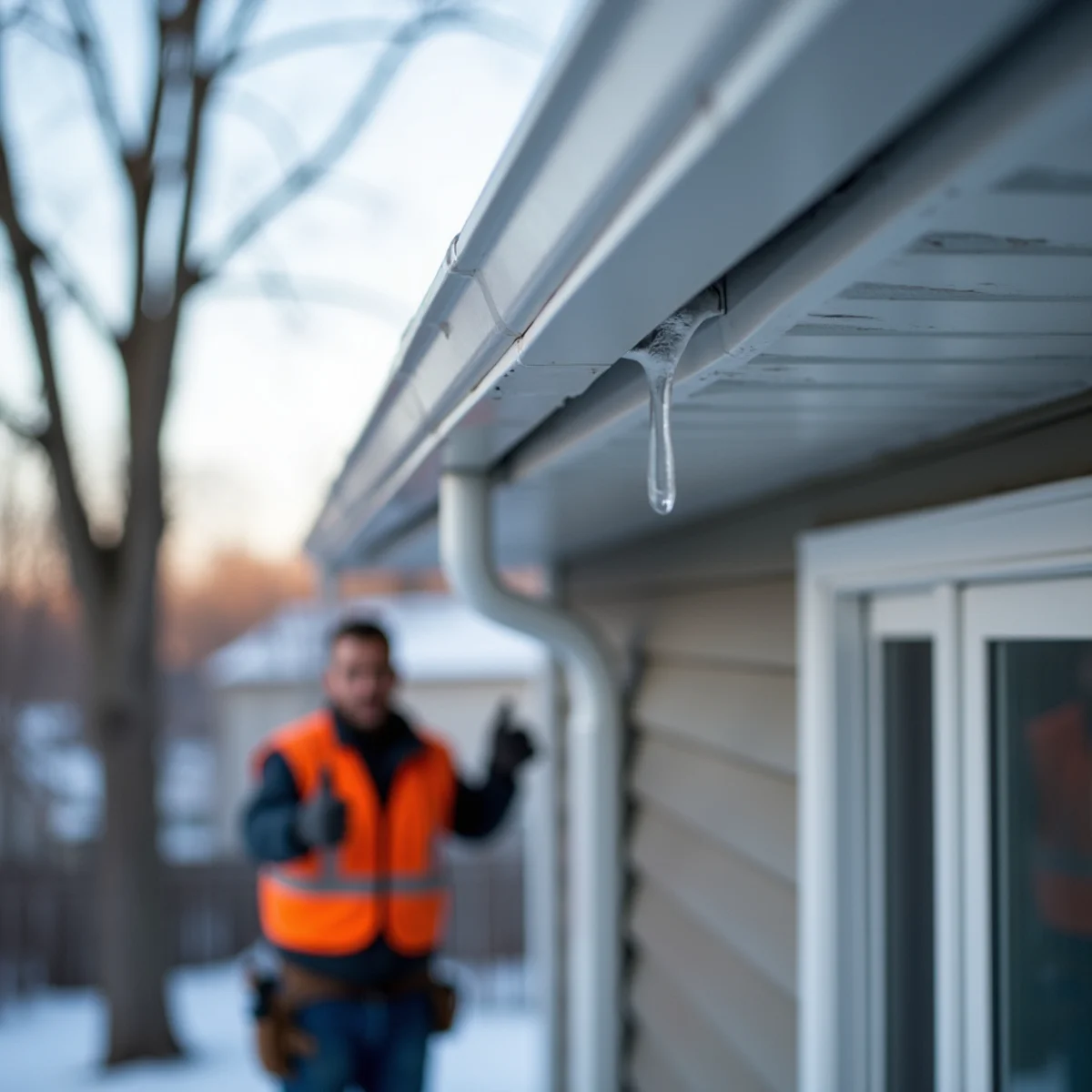
Soffit and fascia protect your roofline and enable attic ventilation. Soffit vents let air flow into the attic to control moisture and reduce ice dams, while fascia caps the rafter ends and supports the gutters. In Michigan’s climate, failing soffit and fascia lead to ice dams, rot, and siding damage.
What soffit and fascia actually do
The soffit is the underside of the roof overhang, spanning from the wall out to the fascia. It usually contains vents. The fascia is the vertical board that caps the ends of the roof rafters along the eave and carries the gutters.
Together they close in the roofline, keeping weather, pests, and birds out of the attic and rafter tails. They also finish the roof edge visually, framing the transition between roof and wall.
Though they get little attention, they are working components of the roof and attic system, not just trim. When they fail, the consequences reach the siding and the structure.
Attic ventilation and moisture
Soffit vents are the intake side of attic ventilation. Cool outside air enters at the soffit, rises, and exits high vents at the ridge, carrying heat and moisture out of the attic. This airflow keeps the attic dry and the roof deck healthy.
When soffit vents are blocked, painted over, or absent, moist air stagnates. In winter that moisture condenses on cold surfaces and can rot the roof deck and framing; in summer trapped heat drives up cooling costs.
Proper soffit ventilation is one of the least visible but most important protections for a Michigan attic and, by extension, the whole roof.
The ice dam connection
Ice dams form when heat escaping into the attic melts roof snow, which runs to the cold eave and refreezes, building a ridge of ice that backs water up under the shingles. That water then leaks into the wall and behind the fascia.
Good soffit intake ventilation keeps the attic and roof deck cold and even in temperature, reducing the melting that feeds ice dams. Blocked soffits make ice dams worse by trapping the heat that starts the cycle.
Fascia and the flashing behind the gutters are the last line of defense at the eave. When they are damaged or rotted, ice-dam meltwater pours into the wall and siding top courses.
How they protect your siding
The roofline is where water most wants to get into a wall. Sound fascia and properly integrated flashing direct runoff into the gutters and away from the siding below. Failing fascia lets water track behind the top of the siding.
Once water gets behind the top courses, it runs down inside the wall, rotting sheathing and destroying siding from behind. Many mysterious siding failures trace back to a failed fascia or soffit above.
Maintaining soffit and fascia is therefore part of protecting your siding investment, not a separate concern. They work as one system.
Signs of trouble and next steps
Watch for peeling paint and soft or sagging soffit, stained or rotted fascia, gutters pulling away, and pests or birds getting into the overhang. Recurring ice dams are a strong sign of ventilation or insulation problems.
Because soffit, fascia, gutters, and siding tie together, addressing them as a system, often when re-siding, produces the best and most durable result. Patching one while ignoring the others rarely lasts.
If your roofline shows any of these signs, have it evaluated before winter. Overcash Siding handles soffit and fascia along with siding across Novi and Oakland County; call or request a free estimate for a full assessment.