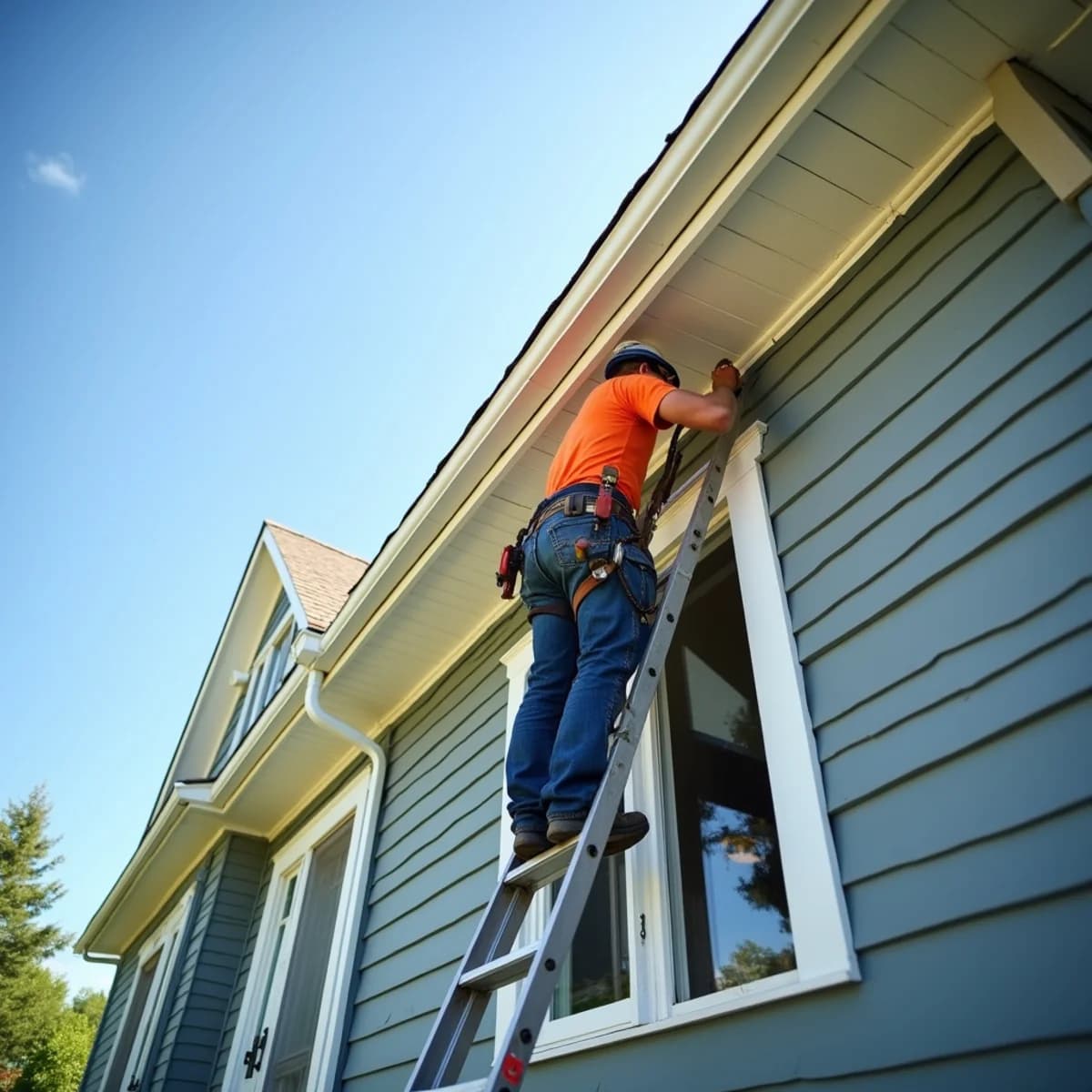
Overcash Siding installs and repairs soffit and fascia on homes throughout Novi, MI. The soffit is the underside of your roof overhang and the fascia is the board along the eave, and together they protect the roofline, support gutters, and, through vented soffit, feed the attic ventilation that fights ice dams. Estimates are free.
Soffit and fascia do not get much attention until they fail, but they are central to a healthy roofline. The fascia is the vertical board that runs along the eaves and carries your gutters; the soffit is the panel that closes off the underside of the roof overhang. Together they seal the roofline against weather and pests while keeping the eave looking finished.
In Michigan they do an extra, critical job: vented soffit is a primary intake for attic ventilation. Proper airflow from soffit vents up through the attic keeps the roof deck cold in winter, which is one of the key defenses against ice dams, the ridges of ice that form at the eaves and force meltwater back under the shingles. Damaged or blocked soffit undermines that whole system.
Signs Your Soffit or Fascia Needs Work
- Peeling paint, rot, or soft spots on the fascia boards
- Sagging, stained, or damaged soffit panels
- Gutters pulling away because the fascia behind them is failing
- Signs of birds, squirrels, or insects getting into the eave
- Persistent ice dams pointing to poor attic ventilation
- Water stains at the eaves or in the attic near the roofline
How Soffit and Fascia Protect Your Home
The fascia does double duty: it caps the exposed ends of the roof rafters against weather and provides the solid backing your gutters fasten to. When fascia rots, gutters loosen and pull away, and water that should be channeled off the roof instead runs down the wall. A sound fascia is the foundation of a working gutter system.
The soffit closes the gap under the overhang so wind-driven rain, birds, squirrels, and insects cannot get into the eave and attic. Solid soffit seals fully, while vented soffit includes perforations that let air flow into the attic. Getting the balance of sealing and ventilation right is part of what makes a roofline durable in our climate.
Ventilation, Ice Dams, and Michigan Winters
Ice dams are one of the most damaging winter problems in Oakland County, and attic ventilation is a first line of defense. When the attic stays cold, the roof deck stays cold, and snow melts and refreezes far less at the eaves. Vented soffit provides the intake air that, paired with ridge or roof venting, keeps that cold-attic airflow moving.
When soffit vents are damaged, painted over, or blocked, that intake is choked, the attic warms, and ice dams form more readily, backing water up under the shingles and into the walls. Repairing and properly venting the soffit is not just cosmetic; in a Novi winter it is part of keeping your roof and walls dry. We install materials, commonly aluminum or vinyl, that resist rot and hold up to the weather.
Our Process
- 1
Inspect the roofline
We check fascia, soffit, and ventilation for rot, damage, and blockage.
- 2
Assess ventilation needs
We evaluate whether soffit venting is adequate for your attic.
- 3
Remove damaged material
We take off rotted fascia and damaged soffit and inspect behind them.
- 4
Repair the substructure
We address any rafter-end or backing damage before new material.
- 5
Install soffit and fascia
We install rot-resistant material with proper venting and gutter backing.
- 6
Finish and clean up
We detail the work, confirm airflow, and clear all debris.
What Affects Soffit & Fascia Cost in Novi
Roofline work is priced by the length of eaves, the material, and the extent of any rot repair. These are the factors that shape the quote.
- Linear footage
- The total length of eaves and overhangs drives material and labor.
- Material choice
- Aluminum, vinyl, and wood differ in cost and durability.
- Extent of rot
- Rotted fascia or rafter ends found during removal add repair work.
- Ventilation upgrades
- Adding or improving soffit venting affects the total.
- Height and access
- Steep or high rooflines require more staging and labor.