Most Wisconsin homeowners policies cover sudden hail damage to siding, subject to your deductible and the specific terms of your policy. Coverage, payout method, and exclusions vary by insurer, so your policy and adjuster have the final say, not your contractor. Overcash Siding is a siding contractor, not an insurance company, so we can inspect, document, and repair the damage, but we do not decide claims or represent your insurer.
What is usually covered
Hail is typically treated as a covered peril under standard homeowners policies because it is sudden and accidental rather than the result of wear or neglect. If a storm dents, cracks, or punctures your siding, your policy may pay to repair or replace the damaged areas.
Coverage is never automatic, though. Your specific policy language, any endorsements, and any separate wind or hail deductible determine what is paid. Always confirm the details with your insurer before assuming a claim will be covered or worthwhile.
It also matters that the damage is recent and clearly storm-related. Insurers generally cover sudden damage from a specific event, not gradual wear, fading, or long-neglected problems. Filing promptly after a storm, while the cause is clear, gives your claim the best footing.
Documenting the damage
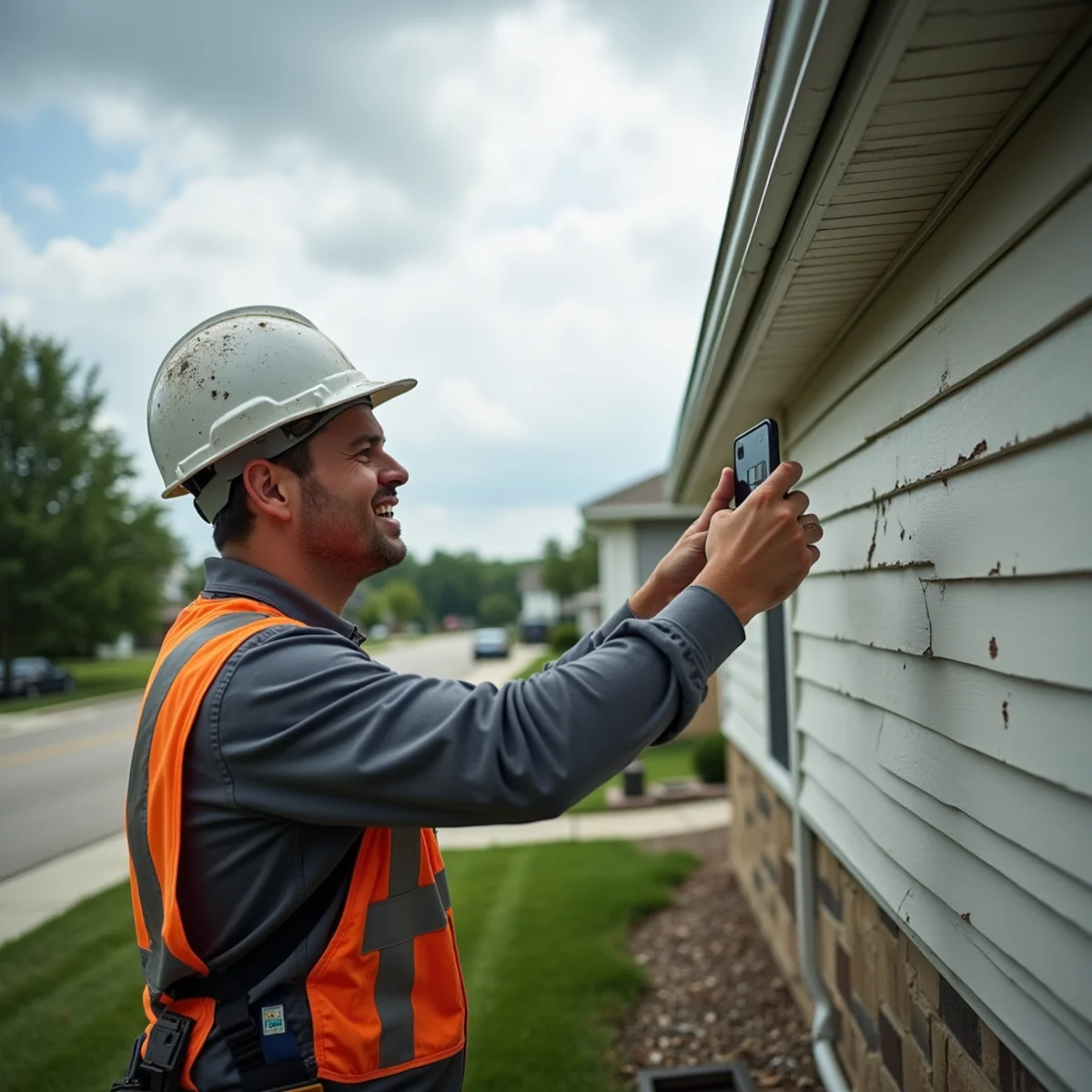
Good documentation strengthens a claim. After a storm, note the date, photograph damage from multiple angles with a reference object for scale, and keep any local weather or hail reports that establish when the storm occurred.
A contractor can perform a detailed inspection and document damage that is easy to miss, such as cracks, spatter marks, and impact bruising on the shaded or less-visible sides of the home. That thorough record helps when the adjuster visits and reviews the claim.
Keep copies of everything: your photos, the contractor’s inspection notes, any repair estimates, and your correspondence with the insurer. A clear paper trail makes the process smoother and gives you a record to reference if questions come up later about scope or payment.
The claims process
The typical sequence is: inspect and document the damage, file a claim with your insurer, meet the assigned adjuster for their inspection, receive a scope and estimate from the insurer, and then have the work completed by your chosen contractor.
There is usually a time limit for filing after a storm, so do not sit on obvious damage. Report it promptly, keep your claim number and adjuster’s contact handy, and read the insurer’s written scope carefully once it arrives so you understand exactly what has been approved and what has not.
You generally choose your own contractor for the repair; your insurer does not assign one to you. Overcash Siding can meet the adjuster on-site and provide our own repair estimate so the agreed scope reflects the real work needed to properly restore your siding.
If your siding is an older or discontinued product, matching it can be a point of discussion with the adjuster, since a partial repair may not blend with weathered existing panels. These are details worth raising early so the scope and payout reflect a result you will actually be happy with.
Deductibles and how payouts are calculated
You pay your deductible before insurance contributes, and many policies carry a separate, sometimes percentage-based, wind or hail deductible that can be larger than your standard one. Check yours before assuming a claim is worthwhile, especially for minor damage.
Payouts come in two common forms. Actual cash value (ACV) pays the depreciated value of the damaged siding, accounting for its age and condition. Replacement cost value (RCV) pays to replace it, often in two parts: an initial ACV payment, then the withheld depreciation once the work is completed and documented. Knowing which your policy provides helps you plan the project financially.
With a replacement cost policy, that means you may need to pay some costs up front and recover the withheld depreciation after the work is finished and you submit the final invoice. Understanding this sequence prevents surprises about cash flow during the project, so ask your insurer to walk you through how and when funds are released.
Where a contractor fits in
Your insurer decides coverage and payout; your contractor performs the inspection and the repair. Be cautious of anyone who promises to get your claim approved or offers to waive or absorb your deductible, which can be improper and is a red flag.
It is also wise to be wary of storm-chasing crews that appear door to door right after a big weather event and pressure you to sign on the spot. A local, established contractor who will still be around next year is a safer partner for work that carries a workmanship warranty.
A good sequence is simple: get your own inspection and documentation, file with your insurer, meet the adjuster, and then have a contractor you trust complete the approved work. Keeping those roles clear protects you and keeps the process straightforward from the storm to the finished repair.
An honest inspection also tells you whether the damage is real and worth a claim, or minor enough to simply monitor, so you are not filing on a hunch. That clarity is valuable whether or not you ultimately move forward with insurance.
Overcash Siding has repaired storm-damaged siding across the greater Madison area since 1978. If a storm has hit your home, request a free estimate and we will inspect the damage and document what we find so you can make an informed decision about filing.