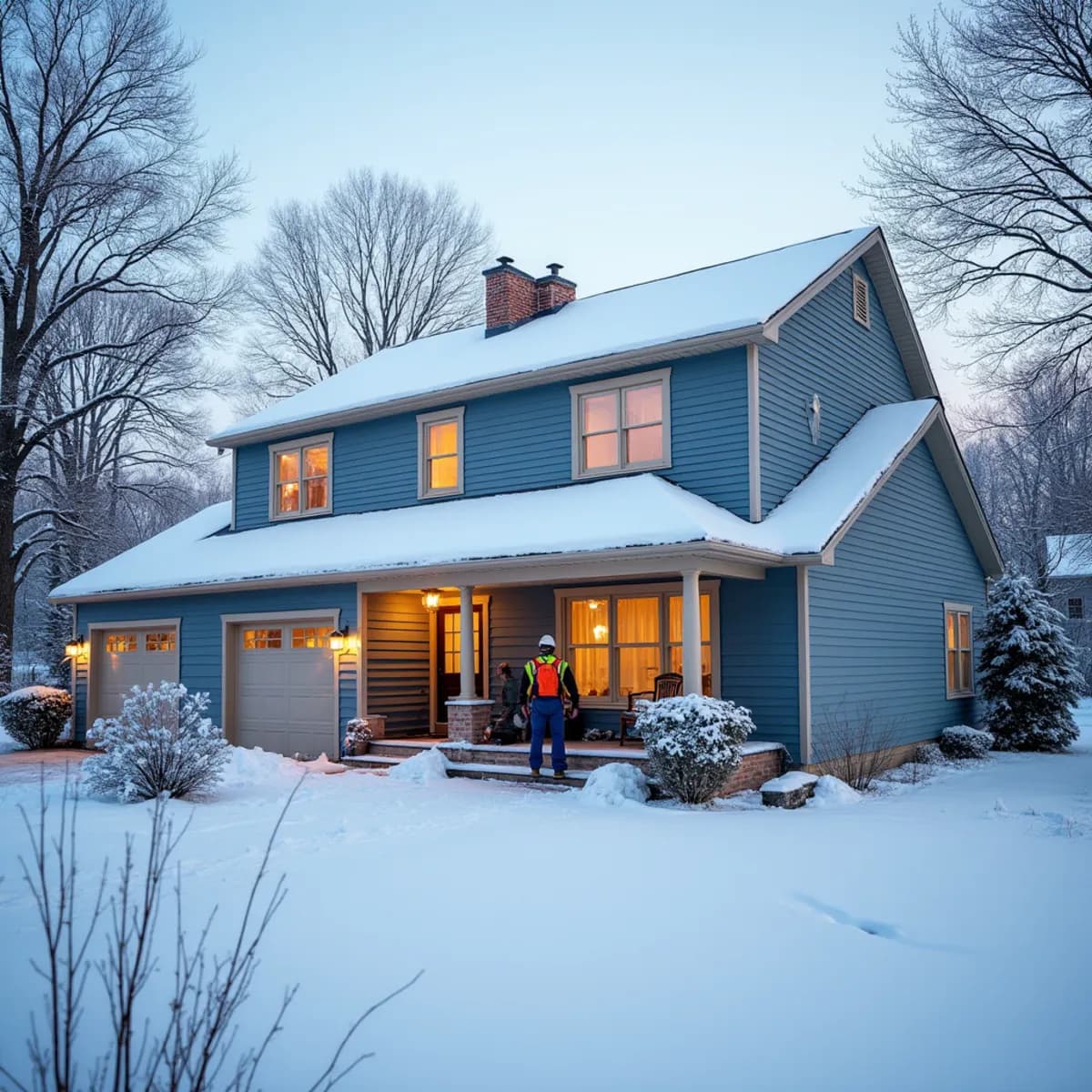
The best siding for Wisconsin winters is a material that resists moisture intrusion, tolerates repeated freeze-thaw cycles, and stands up to wind and snow load. Fiber cement, engineered wood, insulated vinyl, and steel all perform well when installed with proper flashing and a good weather barrier. More important than any single product is correct installation, because gaps and poor flashing are what let winter do damage.
What winter actually does to siding
Wisconsin winters combine deep cold, wind-driven snow, and daily temperature swings that push materials through repeated freeze-thaw cycles. Water finds its way into small cracks and seams, freezes, expands, and slowly pries materials apart over the season.
Cold also makes some materials brittle. Older, thin vinyl can crack when struck in subfreezing temperatures, whether from a shovel, ice, or a stray object. The best winter performers either resist water intrusion outright or stay flexible and stable across a wide temperature range, so they neither soak up moisture nor snap when it gets cold.
Wind is the other constant. Winter storms drive snow and rain sideways, forcing moisture into any seam or gap that is not properly sealed and lapped. A siding system that sheds wind-driven water, rather than merely covering the wall, is what keeps a home dry through a Wisconsin winter.
Sun exposure works against siding too, even in winter. South and west walls see intense low-angle sunlight that can fade colors and, on dark surfaces, drive daily heating and cooling swings that stress the material. A good winter performer holds its color and its shape through both the cold and the sun.
Snow piling against the base of a wall and ice forming at the eaves add another layer of stress. That is why clearances and drainage details matter as much as the panel material itself.
Fiber cement
Fiber cement is dimensionally stable and does not rot, warp, or feed pests. It handles cold well and holds paint finishes for years, which keeps it looking good through many winters. Because it is rigid, the keys to winter performance are properly primed cut edges, correct gapping, and quality flashing so water never sits against the board.
For homeowners who want a low-maintenance, long-lived option with a clean painted look, fiber cement is a strong winter choice. Its non-combustible makeup is an added benefit some buyers value.
One caution: because fiber cement is rigid, it relies entirely on the installer to leave proper expansion gaps and to seal every cut edge. Done right, it shrugs off Wisconsin winters for decades. Done carelessly, it can wick moisture at unsealed edges and eventually spall. The material is only as good as the crew.
Insulated vinyl
Insulated vinyl bonds a foam backer to the panel, adding rigidity and a layer of continuous insulation. The foam helps reduce thermal bridging through the studs and makes the panel more impact-resistant in the cold than hollow vinyl, which addresses vinyl’s main winter weakness.
It is a strong value choice for Wisconsin homes focused on comfort and efficiency, offering low maintenance and a wide color palette at a friendlier price than fiber cement. The insulation also helps the siding lie flatter and can modestly dampen outside noise.
The continuous foam layer also helps address thermal bridging, where heat escapes through the wall studs. In an older home with limited wall insulation, that added layer can make exterior walls feel less drafty in January. It is one of the few upgrades that improves comfort and appearance at the same time.
Engineered wood and steel
Engineered wood resists impact and flexes rather than cracking in the cold, which is helpful during winter storms and around active households. Its treated composition resists rot and pests when clearances above the snow line are respected and the coating is kept intact.
Steel siding is extremely durable, will not crack in cold, and sheds snow and ice well. It is a favorite where maximum toughness matters, though it costs more and can dent under a hard impact. For a home that takes a beating from weather, steel is hard to wear out.
Both engineered wood and steel are worth considering when a home faces heavy exposure, such as open, windswept lots common in the countryside around Dane County. There, wind-driven snow and debris test siding harder than on a sheltered urban lot, and a tougher material can be the difference between decades of good service and early repairs.
Installation is what makes the difference
The best material on paper will still fail if water gets behind it. Proper house wrap, flashing at windows and doors, correct fastener spacing, and adequate clearance above grade and roofs are what actually keep winter out. These details are invisible once the job is done, but they determine how the siding performs for decades.
Ventilation and drainage behind the siding matter too. A wall assembly that lets incidental moisture escape and dry out will outlast one that traps it, especially through a long stretch of freezing weather. These are the kinds of details that separate siding that lasts from siding that fails early.
Overcash Siding has installed siding through greater Madison winters since 1978, and we know where Wisconsin weather tends to find weak points. If you want help choosing a material that fits your home and your budget, request a free estimate and we will walk your exterior and make a straightforward recommendation.